

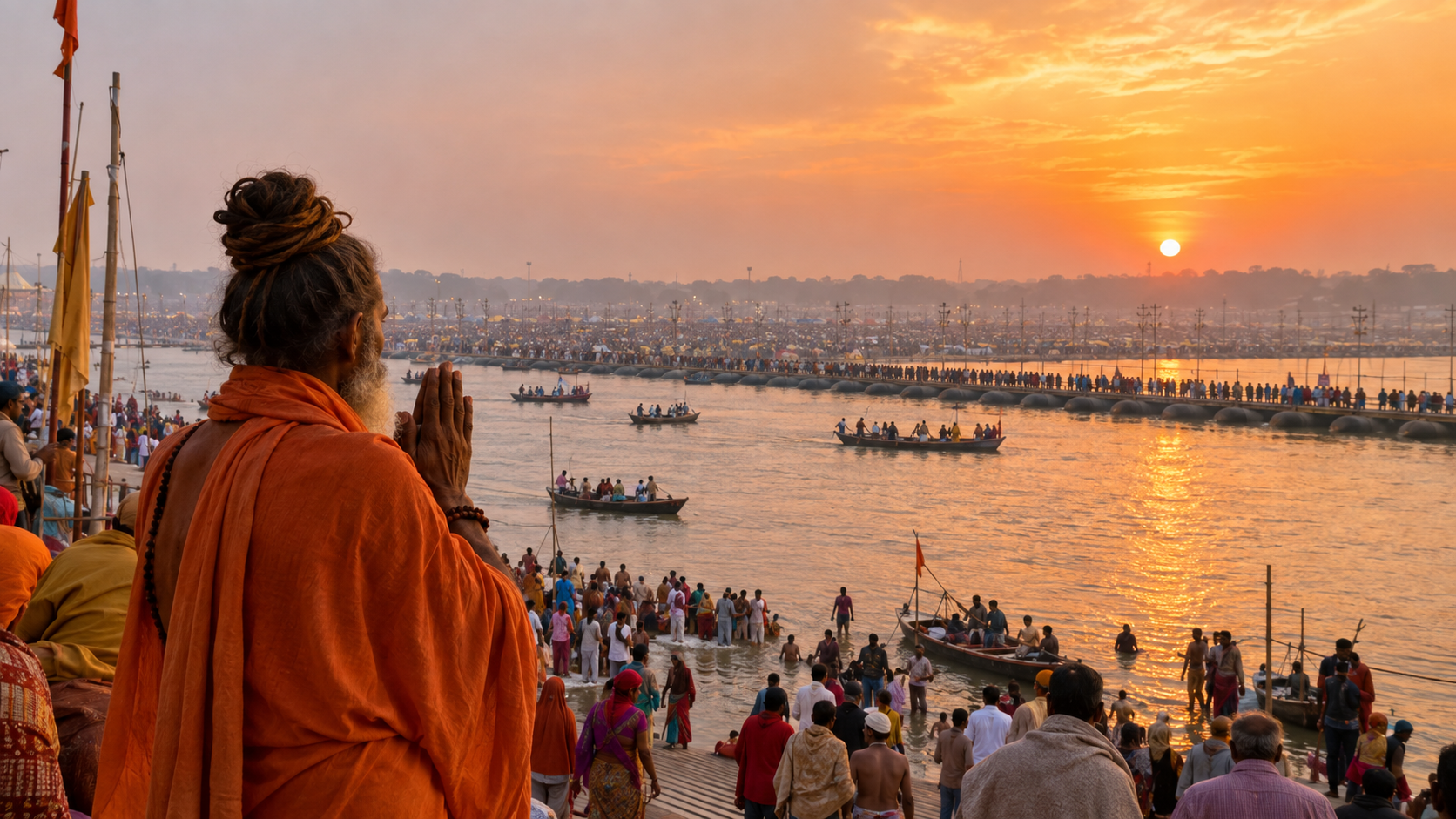
Meenakshi Amman Temple
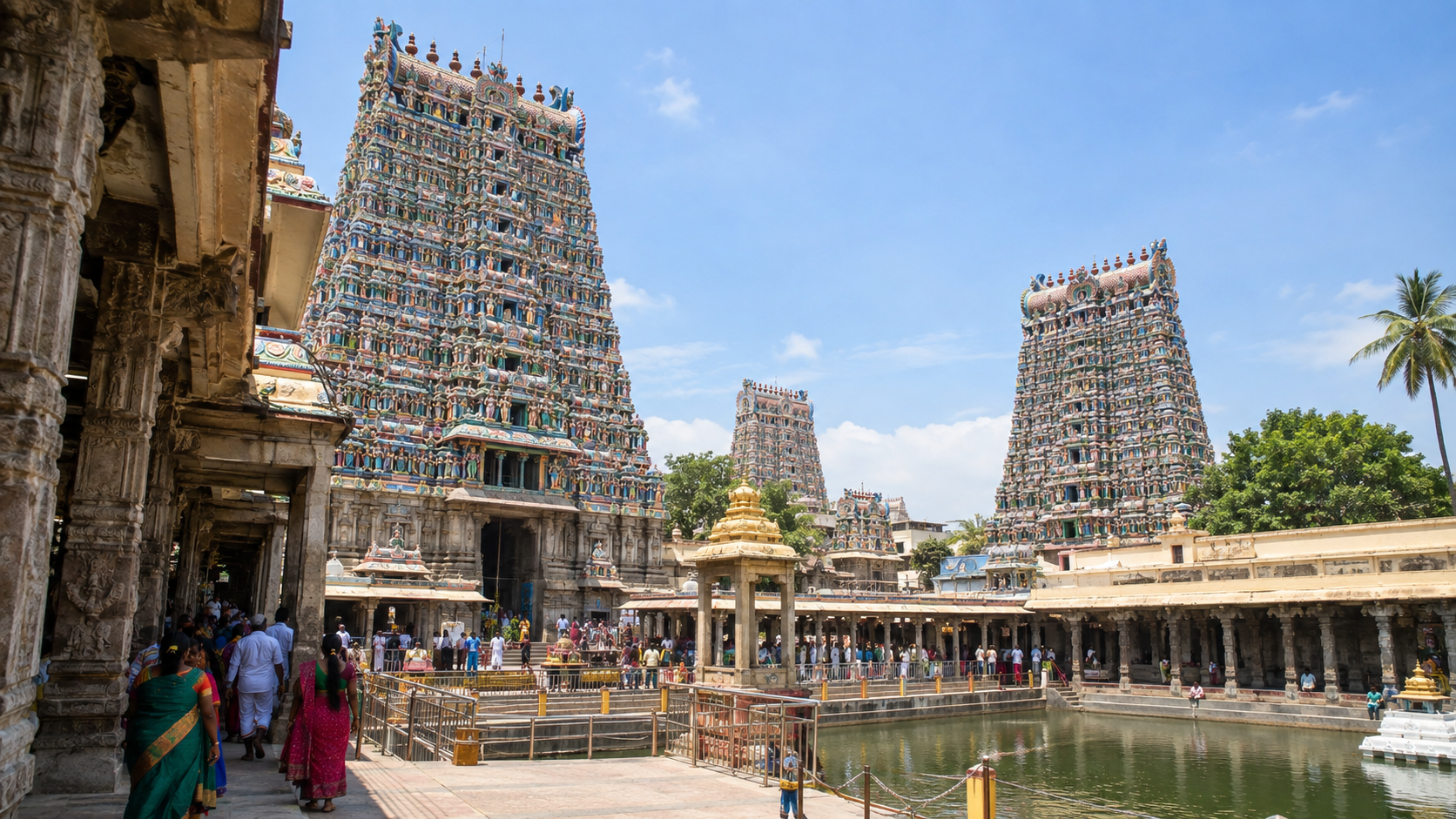
Meenakshi Amman Temple is Madurai’s most celebrated pilgrimage landmark, dedicated to Goddess Meenakshi and Lord Sundareswarar. The vast temple complex is known for its towering gopurams, sculptural detail, sacred spaces and long association with Madurai’s religious and cultural life. This practical guide covers timings, darshan, travel, etiquette, nearby places and useful planning information for pilgrims and visitors.
Meenakshi Amman Temple, Madurai
Meenakshi Amman Temple, officially known as Arulmigu Meenakshi Sundareswarar Temple, stands in the historic centre of Madurai, Tamil Nadu. The temple is dedicated to Goddess Meenakshi and Lord Sundareswarar, the forms of Parvati and Shiva worshipped here. For pilgrims, the visit is primarily a religious experience; for other visitors, the complex is also an important example of South Indian temple architecture and Madurai’s living heritage. The Tamil Nadu HR&CE Department lists the temple at Chithirai Veethi, Madurai – 625001.
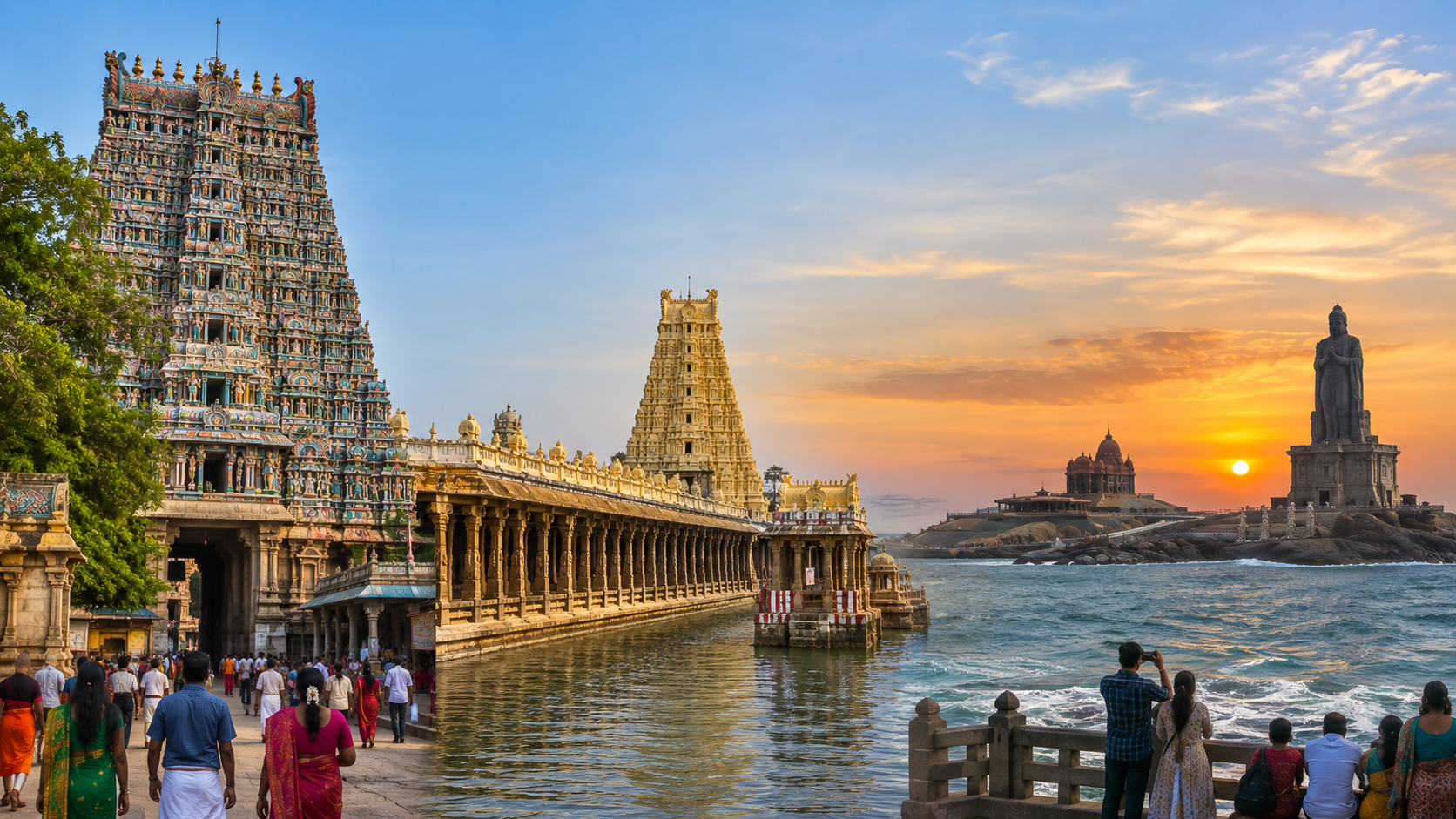
The temple is not a small standalone shrine but a substantial complex of sanctums, halls, corridors, tanks, sculptural work and monumental gateway towers. Its colourful gopurams are among the defining visual symbols of Madurai. The Government of India’s tourism portal also highlights the complex’s large gopurams, sculptural decoration and the Aayiram Kaal Mandapam, commonly known as the 1000-pillared hall.
Spiritual Importance of Meenakshi Amman Temple
The religious identity of the temple centres on Meenakshi and Sundareswarar. The temple is especially significant within Madurai’s traditions of Shaivite worship, with the divine marriage of Meenakshi and Sundareswarar forming an important part of the city’s festival calendar.
The temple’s own HR&CE records identify the Meenakshi-Sundareswarar Thirukalyanam, or celestial wedding, as a temple speciality. The annual Chithirai Festival in April or May is closely associated with this tradition and attracts large numbers of devotees. The Madurai district administration describes the festival as the celebration of the celestial wedding of Meenakshi and Sundareswarar.
For a pilgrim, the atmosphere can be quite different from that of a sightseeing stop. Rituals, queues, worshippers and festival activity are part of the temple’s everyday religious life. Visitors should therefore allow enough time and avoid treating the inner temple spaces simply as an architectural attraction.
Meenakshi Amman Temple History
Madurai has a long association with the Meenakshi-Sundareswarar tradition, while the monumental complex seen today reflects several periods of construction, rebuilding and expansion. Tamil Nadu government information credits the Pandya period with the temple’s earlier foundations and identifies the Nayak rulers as major contributors to the form and grandeur of the complex that developed from the 16th century onward.
The history of the temple is also closely connected with local religious traditions and legends. One well-known tradition tells of Meenakshi as the divine ruler of Madurai and of her marriage to Sundareswarar, a form of Shiva. These accounts belong to the religious and literary traditions surrounding the temple and should be understood as sacred legend rather than presented as independently verified historical events.
Over the centuries, the temple became an important part of Madurai’s urban identity. Its towers, streets and surrounding markets remain closely connected with the historic centre of the city. The temple therefore offers more than an isolated monument: it is part of a functioning pilgrimage district where worship, commerce and everyday city life meet.
Meenakshi Temple Architecture and Gopurams
Architecture is one of the strongest reasons visitors spend time exploring the temple beyond the main darshan.
The most immediately recognisable features are the towering gopurams, covered with rows of brightly painted sculptural figures. The Government of India’s Incredible India portal describes 14 gopurams in the temple complex, with major towers rising to roughly 45–50 metres.
Inside, the Aayiram Kaal Mandapam is another notable feature. Its carved pillars demonstrate the detailed stonework associated with the temple’s architectural tradition. The complex also contains the Potramarai Kulam, or Golden Lotus Tank, which is recorded by the temple administration as one of its sacred features.
When walking through the temple, look beyond the large towers. Corridors, columns, sculptures and smaller architectural details often reveal more about the craftsmanship than a quick walk through the main entrance.
Meenakshi Amman Temple Timings
The current temple administration lists the following regular opening hours:
| Session | Current timing |
|---|---|
| Morning | 5:00 AM to 12:30 PM |
| Afternoon closure | 12:30 PM to 4:00 PM |
| Evening | 4:00 PM to 10:00 PM |
These timings are published by the Tamil Nadu Hindu Religious and Charitable Endowments Department. The temple also notes that daily pooja timings can change during festivals.
Some tourism pages currently display a 9:30 PM closing time, so travellers should rely on the temple administration’s current schedule when planning a specific visit.
The temple’s published pooja schedule currently includes Thiruvanandal Pooja at 5:30 AM, Vila Pooja from 6:30 AM, Kalasandhi Pooja from 10:30 AM, evening pooja from 4:30 PM, Arthajama Pooja from 7:30 PM and Palliyarai Pooja from 9:30 PM. Ritual access and viewing arrangements can vary, so these timings should not be treated as a guarantee of a particular darshan experience.
Meenakshi Temple Darshan and Entry
Darshan planning is easiest when you separate the temple’s general visiting hours from individual ritual timings. Opening hours indicate when the temple is accessible, but queues and arrangements around the shrines can vary depending on the day, pooja schedule and festival activity.
The temple administration currently lists special entrance charges of Rs. 100 for Amman and Swamy darshan together, Rs. 50 for either Amman or Swamy, along with other separately priced services. These charges are subject to change, so visitors should check the current temple information before paying for a service.
For a smoother visit:
- Reach before the busiest part of the day if your schedule allows.
- Keep additional time for security checks and queues.
- Wear comfortable clothing suitable for a religious site.
- Avoid carrying unnecessary luggage into the temple area.
- Check the latest temple instructions if travelling during a major festival.
Do not book a trip around a particular pooja solely because it appears on an online schedule. Ritual timings and access arrangements can change, particularly during festivals.
Meenakshi Temple Dress Code and Etiquette
Dress respectfully for the temple. Conservative clothing that covers the shoulders and knees is a sensible choice for both men and women, particularly for pilgrims intending to spend time near the shrines.
Footwear and other items may be subject to temple security and storage arrangements. Rules concerning mobile phones, cameras, bags and photography should be checked at the entrance because enforcement and permitted areas can change.
A few simple habits make the visit easier:
- Remove footwear where instructed.
- Follow queue and security directions rather than trying to bypass them.
- Keep voices low in active worship areas.
- Do not photograph people during prayer without permission.
- Follow instructions from temple staff and security personnel.
- Avoid carrying large bags or unnecessary valuables.
- Allow worshippers priority around active shrines.
If you have mobility needs, young children or elderly travellers in your group, it is worth contacting the temple in advance about the most suitable entrance and current access arrangements. The official temple contact number listed by HR&CE is 0452-2344360.
Best Time to Visit Meenakshi Amman Temple
Madurai is warm for much of the year, so the practical choice is to plan temple sightseeing around the heat as well as religious activity. The cooler part of the year, broadly from November to February, is generally more comfortable for spending time outdoors in Madurai.
Early morning can be a good choice for travellers who want to start the day with darshan before moving on to other attractions. The evening session is another option, particularly for visitors staying in central Madurai.
Festival periods require a different approach. Chithirai, held around April or May, is an important period in Madurai’s religious calendar and can bring substantially greater crowds and changes to normal movement around the city. The district administration confirms Chithirai as an annual April/May festival associated with the Meenakshi-Sundareswarar wedding tradition.
If you specifically want to experience a major festival, plan accommodation and local transport well ahead and verify the official schedule before travelling.
How to Reach Meenakshi Temple from Madurai
From Madurai Railway Station
Madurai Junction is the city’s principal railway station and has direct rail connections with several major Indian cities. From the station, travellers can continue to the temple area by auto-rickshaw, taxi or local city transport.
Because the temple is in the historic central area, road conditions and parking can be less convenient than at attractions with large dedicated parking areas. If you are travelling with elderly family members, confirm the most practical drop-off point with your driver before starting the final approach.
From Madurai Airport
Madurai Airport at Avaniyapuram is about 12 km from Madurai city according to the district administration. Taxis and other local transport can be used to continue into central Madurai and the temple area.
Allow extra road time during busy periods rather than planning a temple visit around a very tight flight connection.
By Road
Madurai is well connected by road to other parts of Tamil Nadu and neighbouring states. The district administration lists several national and state highways serving the city and wider district.
For pilgrims arriving by private car, it is usually more practical to plan the final temple approach around an appropriate parking or drop-off point rather than expecting to drive directly up to the entrance.
Local Transport in Madurai
Auto-rickshaws, taxis and city buses are useful for moving around Madurai. For a short pilgrimage itinerary, staying in or near central Madurai can reduce unnecessary travel between the temple and other city attractions.
If travelling during festival days, allow additional time for traffic diversions, crowds and restricted vehicle movement. Local drivers are often better placed to advise on the final approach on a particular day.
Accessibility and Planning for Senior Travellers
The temple is a large historic complex rather than a modern purpose-built visitor attraction. Expect walking, queues, security procedures and stone or uneven surfaces in parts of the complex.
Senior citizens and travellers with mobility limitations should plan conservatively. Avoid scheduling several distant attractions immediately after the temple if the main purpose of the trip is pilgrimage. Carry essential medicines and personal requirements as needed, but minimise luggage because security restrictions can make bulky belongings inconvenient.
If wheelchair access, assisted entry or other specific arrangements are important to your visit, confirm the current facilities with the temple before travelling rather than relying on older online travel information.
Where to Stay Near Meenakshi Amman Temple
Staying in central Madurai is convenient for pilgrims who want early-morning or evening temple visits. It also makes it easier to combine the temple with other central attractions without repeatedly travelling across the city.
When choosing accommodation, consider:
- Walking or short auto/taxi access to the temple area.
- Ease of reaching the railway station.
- Availability of family rooms if travelling in a group.
- Lift access for elderly travellers.
- Early breakfast arrangements if you plan an early darshan.
- Secure luggage storage if you have a late departure.
The best area depends on whether your priority is immediate temple access, quieter accommodation or convenient onward travel.
Meenakshi Temple Nearby Attractions
The temple works well as the centrepiece of a Madurai sightseeing itinerary. Nearby attractions allow travellers to combine pilgrimage with the city’s history and cultural heritage.
Thirumalai Nayak Palace
Thirumalai Nayak Palace is a major historical attraction in Madurai and is a natural addition to a temple-focused city itinerary. Its monumental courtyards and architectural character provide a useful contrast to the religious architecture of Meenakshi Amman Temple.
Koodal Azhagar Temple
Koodal Azhagar Temple is another important religious site in Madurai and can be included by travellers interested in visiting more than one historic temple during their stay. The Government of India tourism portal lists it among Madurai’s cultural attractions.
Gandhi Memorial Museum
The Gandhi Memorial Museum offers a different perspective on Madurai, focusing on India’s freedom movement and Mahatma Gandhi. It is a useful stop for travellers who want to balance temple visits with modern Indian history.
Vandiyur Mariamman Teppakulam
Vandiyur Mariamman Teppakulam is a large temple tank located about 4 km east of Meenakshi Temple. The Madurai district administration notes its association with the annual float festival held around January/February.
Thirupparankundram Temple
Pilgrims with additional time can consider Thirupparankundram Murugan Temple, located about 8 km south of Madurai. The district administration identifies it as one of the six special abodes associated with Lord Murugan and notes its rock-cut temple features.
Practical Tips for a Meenakshi Temple Visit
A little preparation can make the visit considerably easier.
- Check the latest official opening and pooja timings before leaving your hotel.
- Keep your itinerary flexible around darshan queues.
- Dress conservatively and comfortably.
- Carry only essentials into the temple area.
- Keep some time aside to appreciate the architecture rather than rushing directly in and out.
- If travelling during Chithirai or another major festival, expect heavier crowds and possible changes to normal timings.
- Senior citizens and families with children should allow additional time for walking and queues.
- Confirm current entry charges and security restrictions before departure.
- Use official temple information for time-sensitive arrangements.
The official temple administration currently provides its contact details through the Tamil Nadu HR&CE portal, while the Madurai district administration maintains current city travel information. These are the most appropriate references to check when a specific rule, timing or festival arrangement matters to your trip.
Plan Your Madurai Pilgrimage with Trip to Yatra
Meenakshi Amman Temple is best approached as a complete pilgrimage experience rather than a quick sightseeing stop. Give yourself enough time for darshan, walking through the historic complex and visiting the surrounding religious and cultural landmarks of Madurai.
If you are planning a pilgrimage to Madurai and want help arranging the practical details, Trip to Yatra can help you plan the journey around your preferred travel dates, temple visit and local sightseeing. For current timings, festival arrangements and temple-specific rules, confirm the latest information with the temple before departure.