
Dwarkadhish Temple
Dwarkadhish Temple, also known as Jagat Mandir, is one of Dwarka’s most important pilgrimage sites and a major Krishna shrine in Gujarat. Located beside the Gomti creek, the temple attracts devotees throughout the year. This practical guide covers darshan, timings, temple etiquette, the best season to visit, how to reach the temple and useful places to include in a Dwarka pilgrimage.
Dwarkadhish Temple, Dwarka: An Essential Pilgrimage Guide
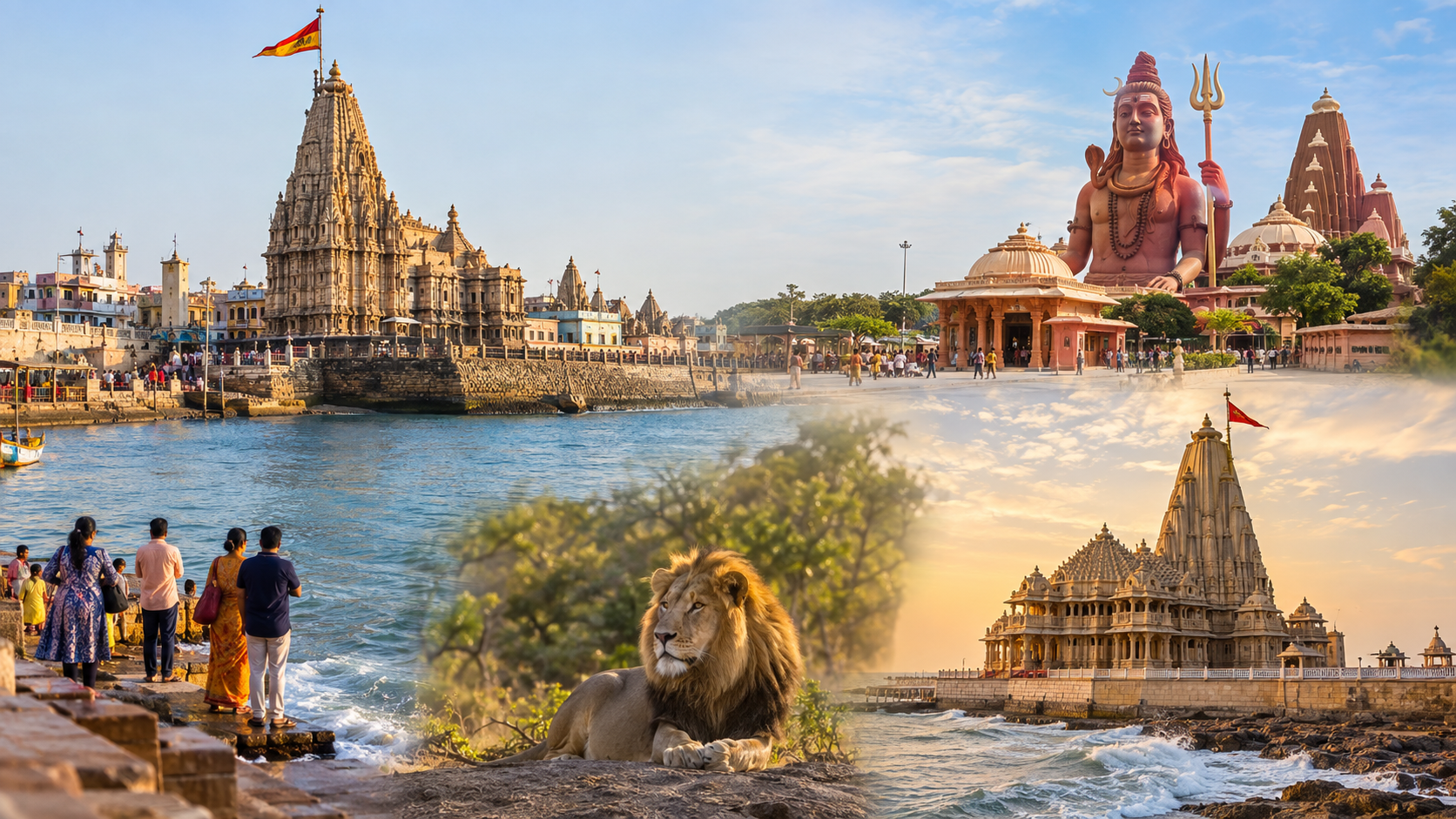
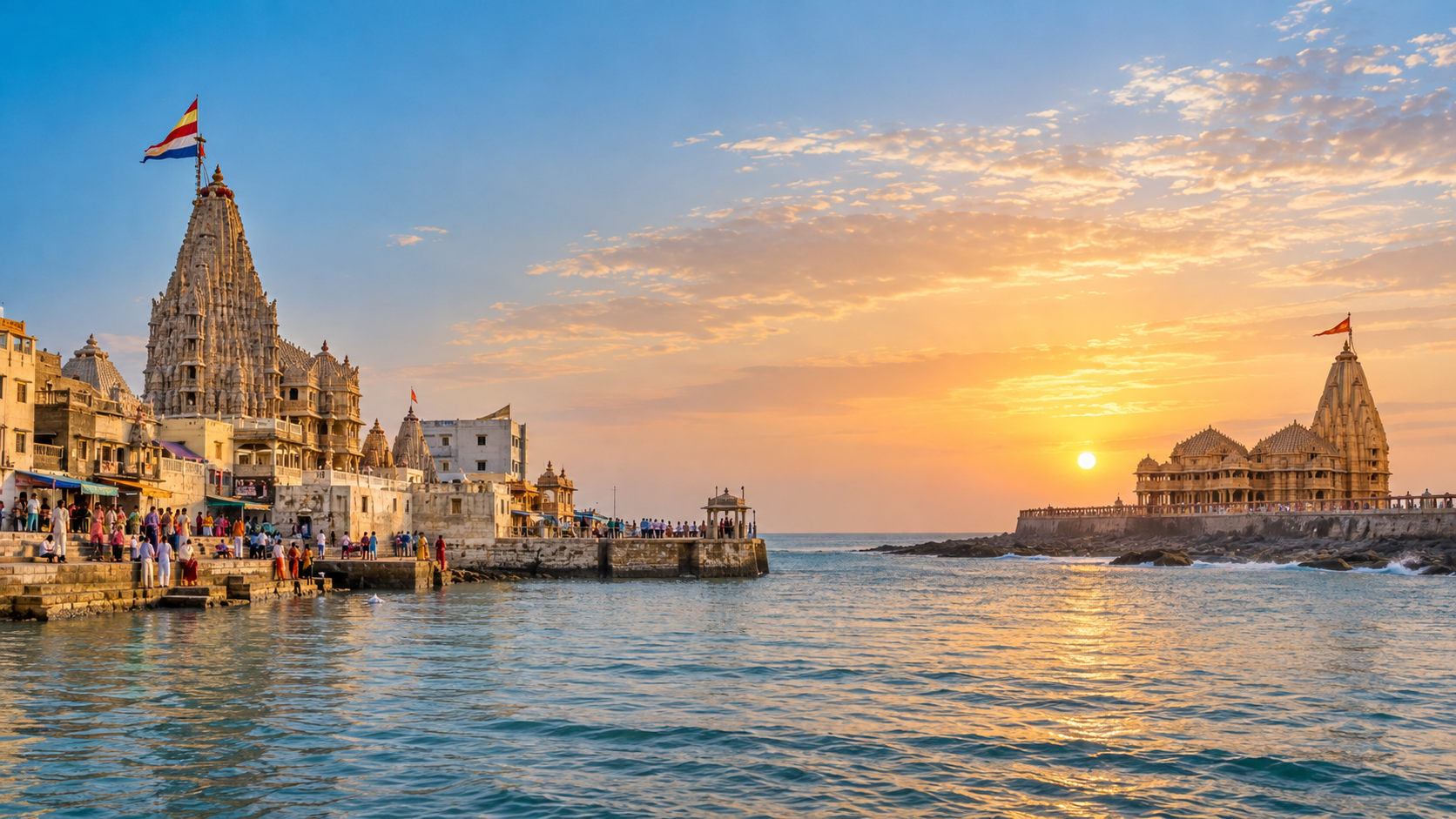
Dwarkadhish Temple is the principal Krishna temple in Dwarka, Devbhumi Dwarka district of Gujarat. Also known as Jagat Mandir, it stands near the Gomti creek, close to where the creek meets the Arabian Sea. The shrine is central to a Dwarka pilgrimage and is traditionally associated with Lord Krishna, who is worshipped here as Dwarkadhish, meaning the Lord or King of Dwarka. The temple is also recognised as one of the four Char Dham pilgrimage sites.
For travellers, the appeal is not limited to the main darshan. The temple sits within an important cluster of sacred places including Gomti Ghat, Rukmini Devi Temple and other Dwarka temples. A visit can therefore be planned as part of a wider pilgrimage rather than as a quick stop at a single shrine.
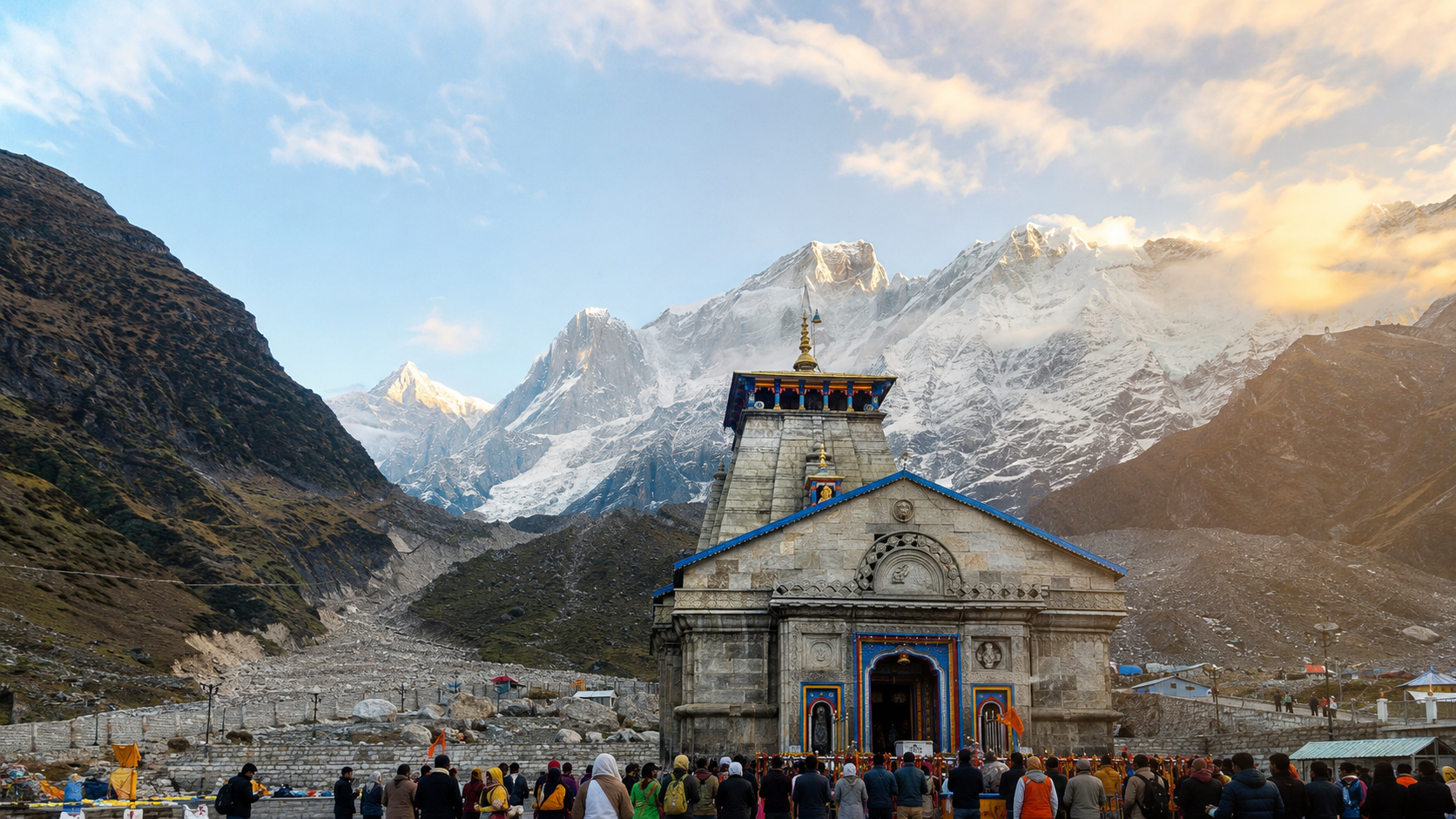
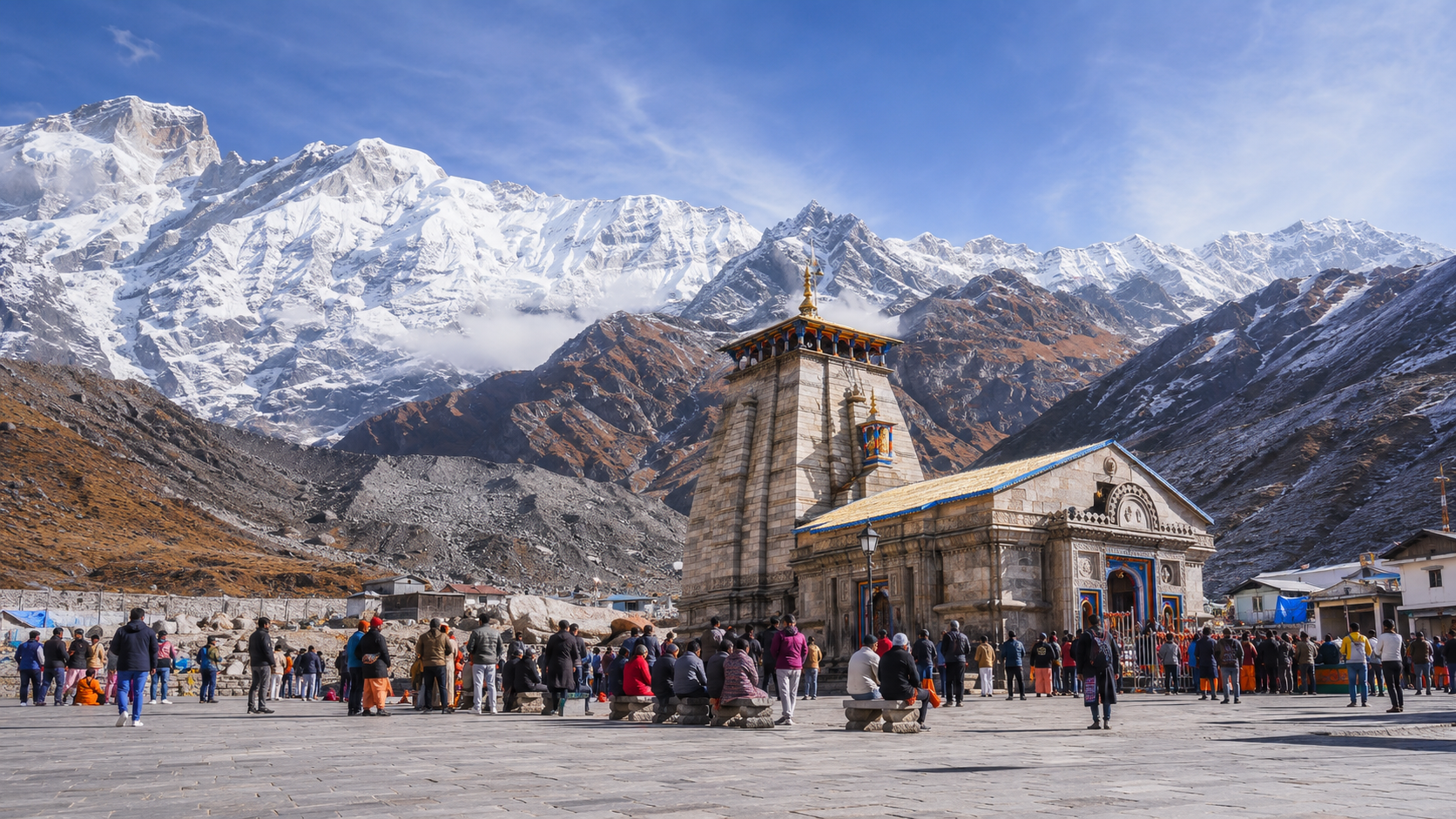
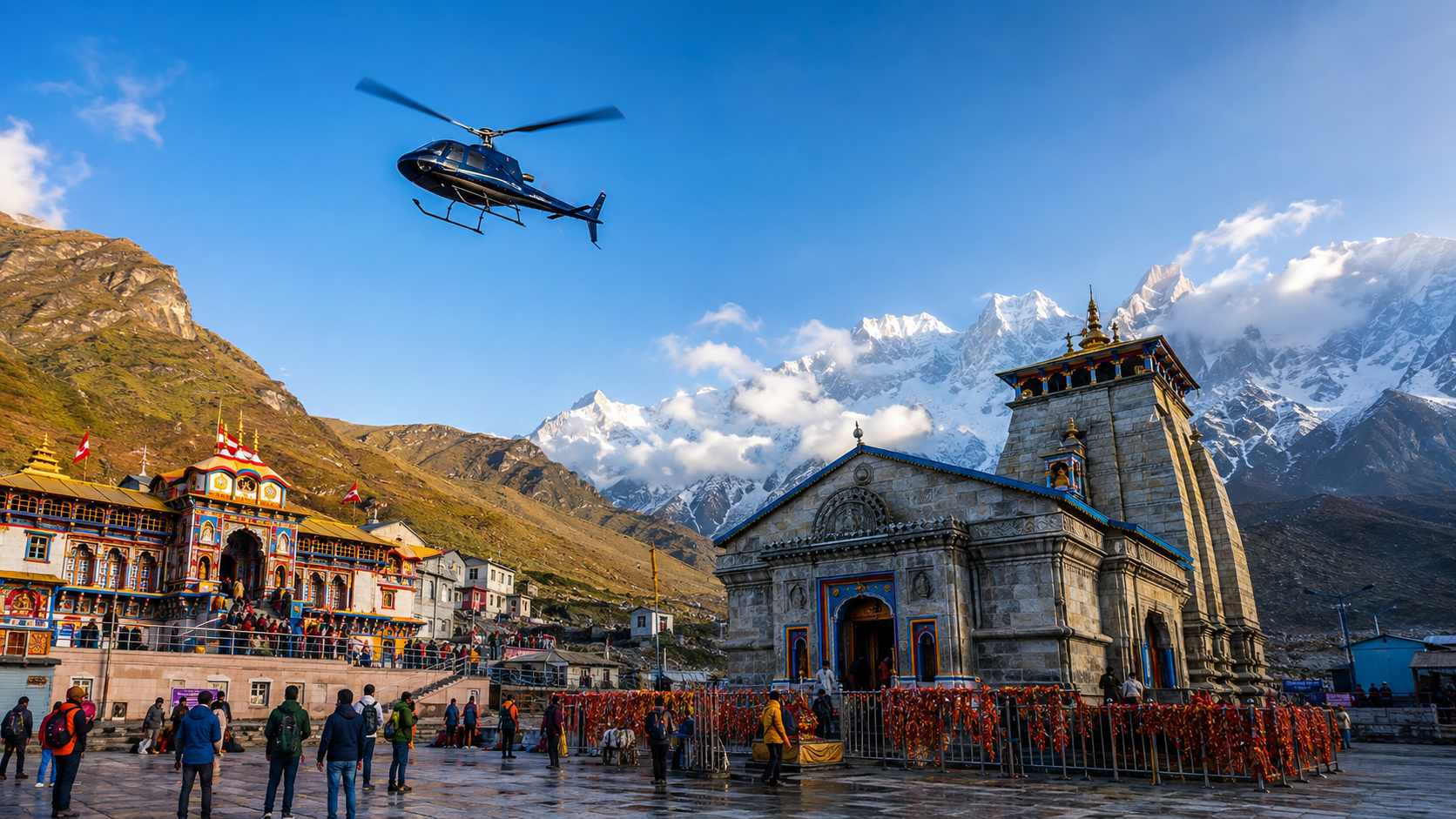
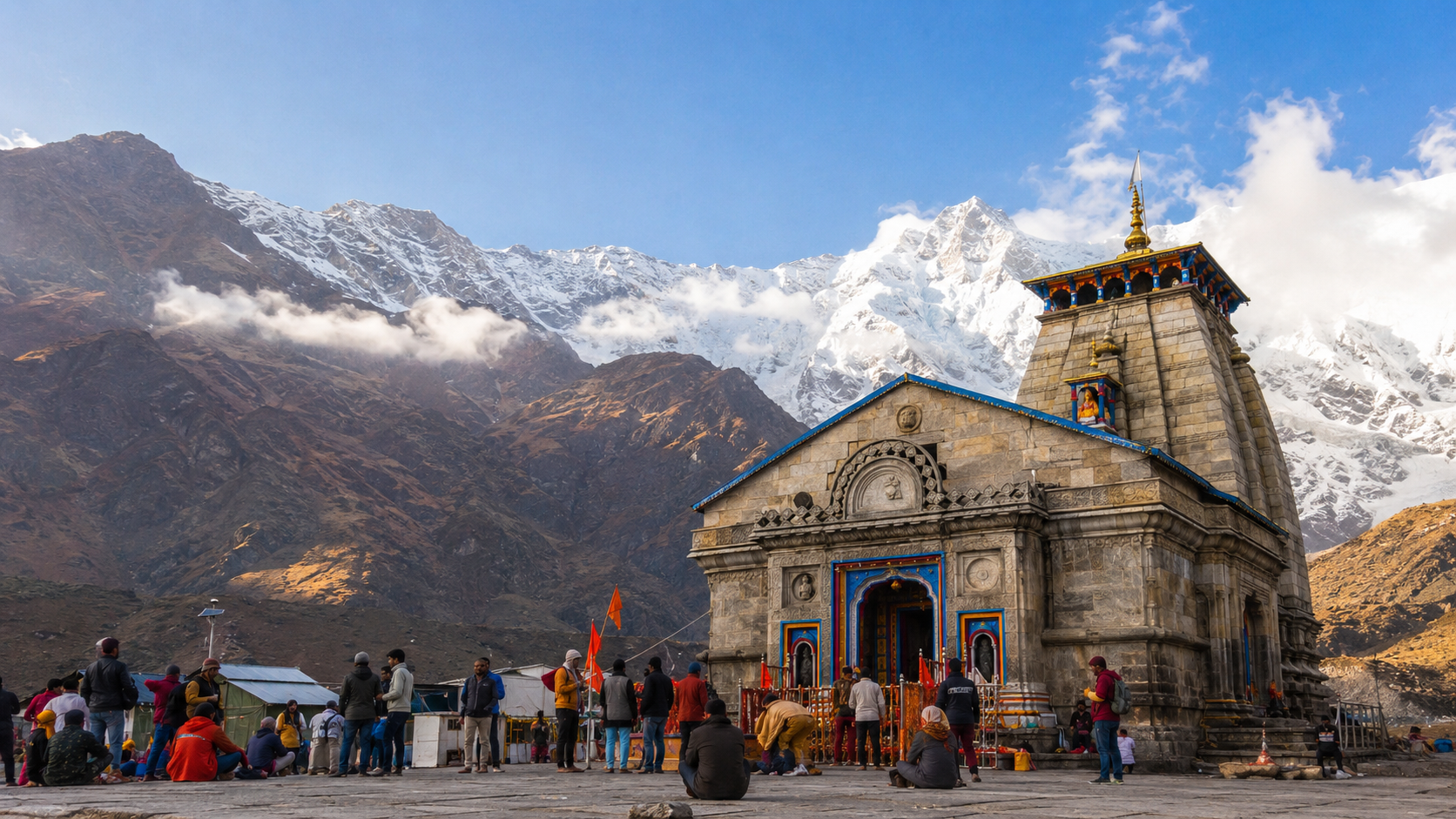
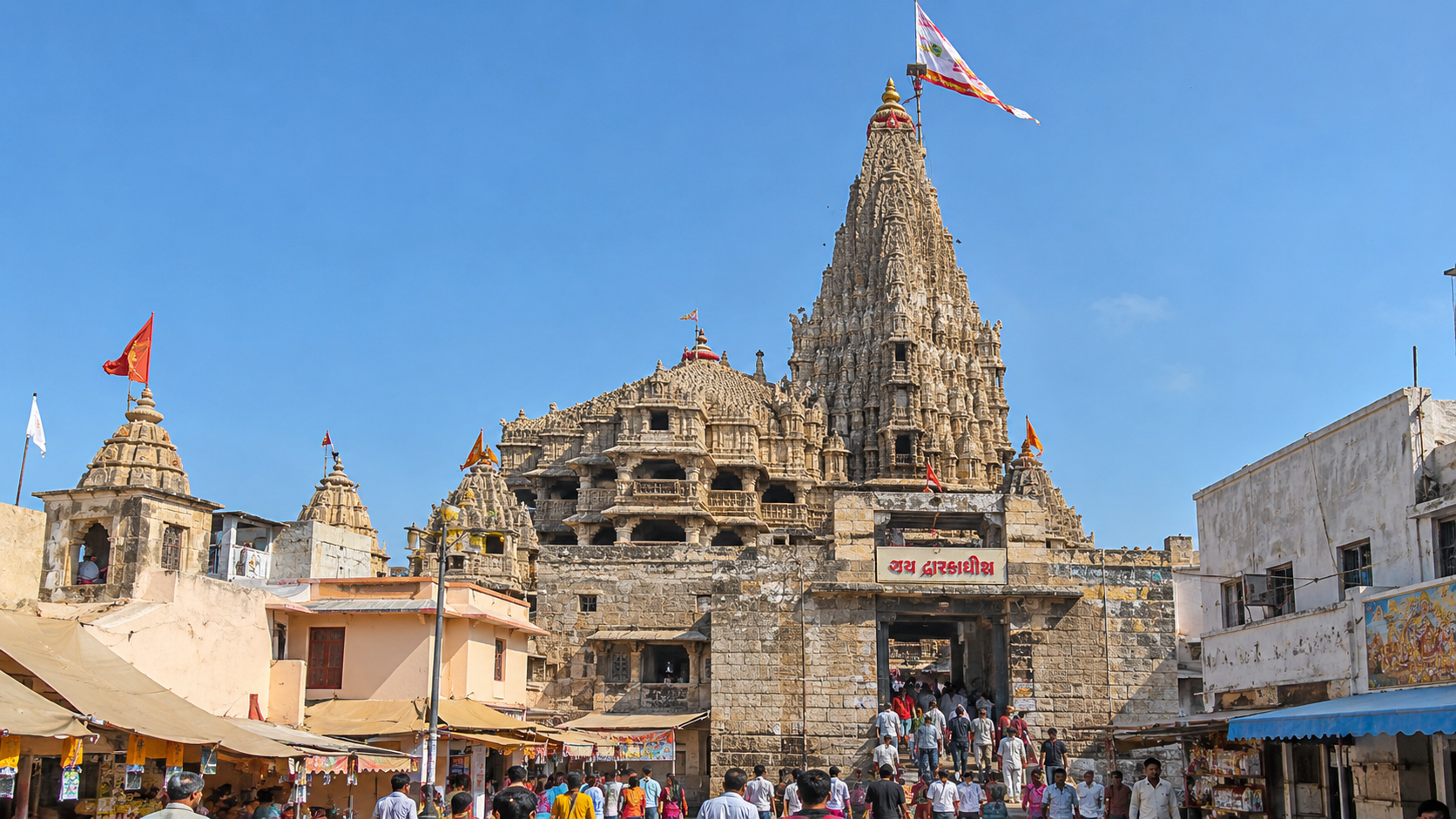
The present temple is an imposing stone structure with a tall shikhara and richly carved exterior. Visitors approach the temple through a flight of steps, so the physical effort involved should be considered when planning a visit, particularly for elderly pilgrims or travellers with limited mobility.
Spiritual Importance of Dwarkadhish Temple
Dwarka has a particularly important place in the Vaishnav tradition and in Hindu pilgrimage. The city is traditionally regarded as the kingdom or abode of Lord Krishna, and the Dwarkadhish Temple is its principal shrine.
The temple is associated with the Char Dham circuit along with Badrinath, Puri and Rameswaram. For many pilgrims, visiting Dwarka is therefore part of a longer religious journey that may also include Somnath, Nageshwar Jyotirlinga, Rukmini Devi Temple and other sacred sites in Gujarat.
The temple is also known as Jagat Mandir. Its traditional importance, daily worship and prominent location in the old part of Dwarka make it one of the city's defining landmarks.
Travellers should distinguish between religious tradition and established historical fact. Stories about Krishna's Dwarka, the ancient city and the temple's origins belong to a combination of Hindu tradition, literary accounts and historical interpretation. They should not all be presented as archaeological fact.
Dwarkadhish Temple History and Architecture
The history of the shrine is closely connected with the religious history of Dwarka. Government tourism sources describe the temple as traditionally attributed to Vajranabh, regarded in Hindu tradition as a descendant of Lord Krishna. The same sources note that the structure has undergone rebuilding and renovation over different periods, with architectural elements associated with later centuries.
The present temple should therefore not be understood simply as an unchanged structure from antiquity. Its current appearance reflects different phases of construction and renovation.
The temple's architecture is one of the first things visitors notice. It rises above the surrounding streets with a prominent shikhara and detailed stonework. The complex is approached through the Swarga Dwar, while the Moksha Dwar serves as the exit. Tourism references describe a substantial flight of steps leading up to the temple, making comfortable footwear and a measured pace useful for visitors.
Some accounts also connect the temple with Adi Shankaracharya and his wider pilgrimage tradition. Such associations are part of the shrine's religious heritage and should be understood in that context rather than treated as proof of every detail of the temple's early construction.
The wider Dwarka area has also attracted archaeological research, including investigations into ancient settlements in and around the coastal region. These studies add an important historical dimension to Dwarka, but archaeological evidence should not be used to establish every detail of traditional accounts about Krishna's city.
Dwarkadhish Temple Darshan and Timings
Temple timings can change because of daily worship, festivals, special ceremonies, crowd management and other local arrangements. Current tourism references list the temple's general visiting periods differently by source. Gujarat Tourism currently lists 7:00 AM to 12:30 PM and 5:00 PM to 9:00 PM, while Incredible India lists 6:30 AM to 1:00 PM and 5:00 PM to 9:30 PM.
For this reason, travellers should not plan an important onward journey around the final few minutes of the published opening period. Confirm the day's schedule locally or through the relevant temple authorities before setting out, especially during Janmashtami and other major festivals.
A useful planning approach is:
- Reach the temple area before the intended darshan period rather than arriving at the last minute.
- Allow additional time during weekends, public holidays and festival periods.
- Check for temporary changes before travelling.
- Keep your itinerary flexible if darshan is the main purpose of the trip.
- Avoid assuming that a published tourist opening time represents the exact timing of every individual ritual.
The temple's worship schedule includes several daily devotional services, and the evening atmosphere can be particularly significant for pilgrims interested in aarti. Exact ritual timings can vary, so they should be confirmed locally on the day of the visit.
Temple Etiquette and Darshan Tips
A visit to Dwarkadhish Temple is best approached as a religious experience rather than simply sightseeing. Modest, comfortable clothing is appropriate, and visitors should respect the sanctity of the worship areas.
Keep these practical points in mind:
- Dress conservatively and comfortably for a place of worship.
- Follow instructions from temple staff and security personnel.
- Maintain patience during crowded darshan periods.
- Do not assume photography or videography is permitted inside every part of the complex.
- Keep valuables to a minimum and follow current instructions regarding belongings.
- Do not rely on unofficial individuals offering guaranteed special access or faster darshan.
- Senior travellers should allow extra time for the steps leading to the temple.
- Keep water and other personal requirements organised before joining a crowded queue.
The most important rule is to check current arrangements rather than relying on an old travel blog or an informal promise about entry.
Best Time to Visit Dwarkadhish Temple
For comfortable sightseeing around Dwarka, November to February is generally considered a favourable period. Gujarat Tourism and Incredible India both highlight the cooler months, particularly November through February, as a good time to explore the city's temples and other attractions.
Winter also works well if the trip includes several outdoor stops. Temperatures are generally more comfortable than during the hotter part of the year, making it easier to combine temple visits with walks around Gomti Ghat and visits to nearby attractions.
There is, however, an important distinction between the best time for comfortable travel and the best time for a particular religious celebration. Janmashtami is a major occasion in Dwarka and attracts very large numbers of devotees. The 2026 Janmashtami programme is scheduled for 4 September, with the celebrations expected to draw substantial crowds.
If attending Janmashtami is the main purpose of the trip, the atmosphere can be especially meaningful, but accommodation, transport and darshan planning require considerably more care. Travellers seeking a quieter pilgrimage experience may prefer a non-festival period.
How to Reach Dwarkadhish Temple
Once you arrive in Dwarka, reaching the temple is straightforward because it is located in the central pilgrimage area. The nearest railway station is Dwarka Railway Station, and the city's rail connection makes train travel a practical option for many pilgrims. Incredible India identifies Dwarka Railway Station as the nearest railway station and Jamnagar Airport as a major airport serving the destination.
By Train
Dwarka Railway Station is the most convenient rail arrival point for a pilgrimage centred on the town. Train availability and journey times depend on your starting city and the current timetable, so check Indian Railways or the relevant railway booking service before finalising the itinerary.
After reaching Dwarka station, travellers can use an auto-rickshaw, taxi or other locally available transport to reach the temple area.
By Air
Jamnagar Airport is identified by Incredible India as the major airport serving Dwarka. Porbandar is another airport option referenced by Gujarat Tourism for the region. Flight schedules can change, so compare current services before booking.
From the airport, a pre-arranged taxi or other road transfer is generally more practical than attempting to connect through multiple local services with luggage.
By Road
Dwarka is connected by road with other parts of Gujarat. State and private bus services, taxis and cars can be used depending on the traveller's starting point. Gujarat Tourism describes the city as well connected by road and bus services.
If you are travelling as a family or elderly group and intend to visit several temples in one day, a private vehicle can make the wider Dwarka itinerary easier to manage.
Local Transport in Dwarka
For a stay focused on the main temple area, several important sights can be combined without arranging a long-distance transfer for every stop. Auto-rickshaws and taxis are useful for reaching temples farther apart, while short local journeys can sometimes be covered on foot.
The temple's location near Gomti Ghat makes it practical to combine a Dwarkadhish Temple darshan with time around the waterfront. Sudama Setu is also close to the temple area and provides access towards the beach and Gomti creek. Gujarat Tourism lists access through Sudama Setu during specified daytime and evening periods, although travellers should verify current operating arrangements locally.
For a full-day pilgrimage circuit, agree on the fare or trip arrangement with the driver before starting where appropriate, particularly if hiring a vehicle for multiple stops.
Nearby Places to Visit in Dwarka
Dwarka is best experienced through a cluster of religious and coastal attractions rather than the main temple alone.
Gomti Ghat
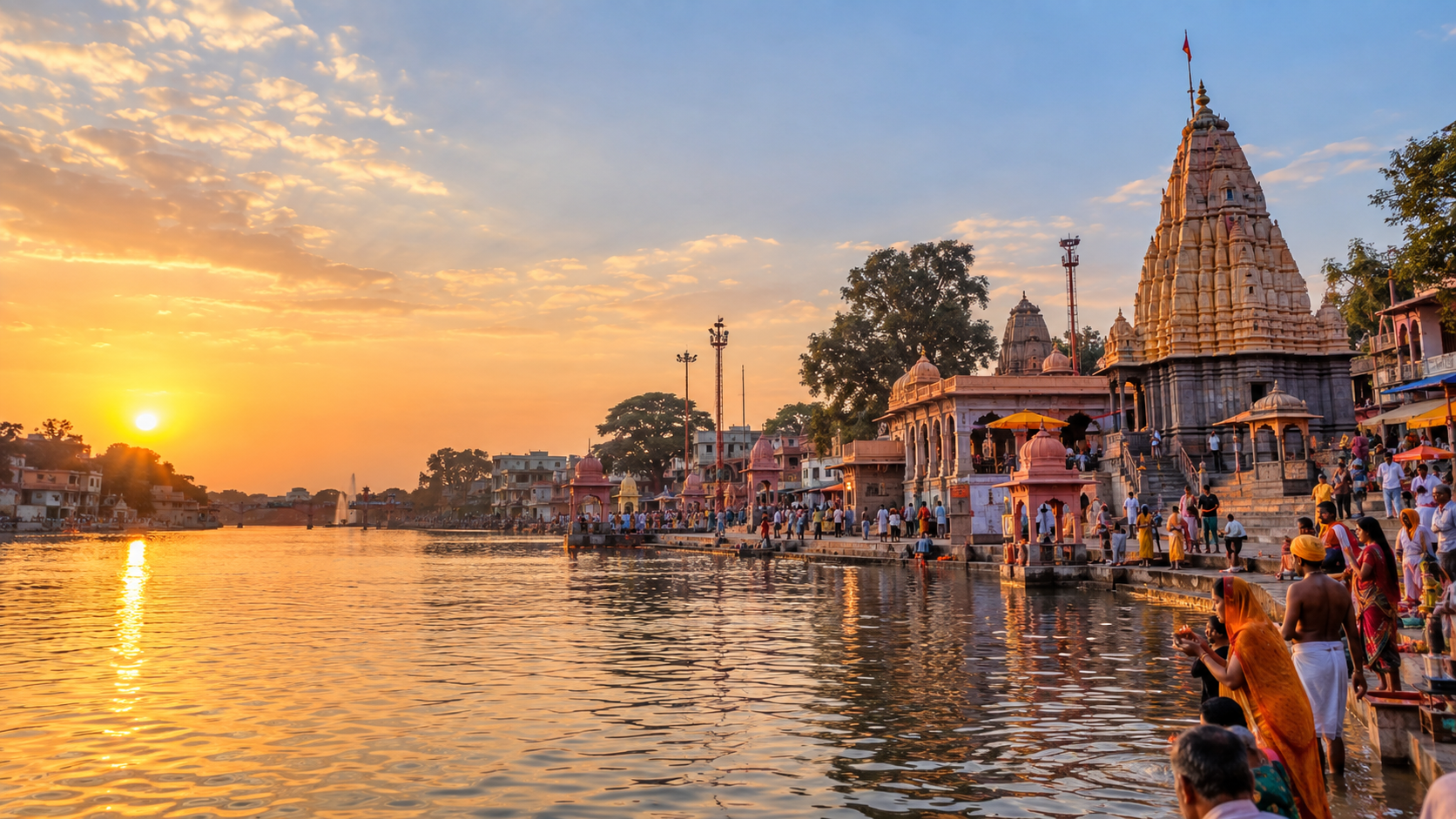
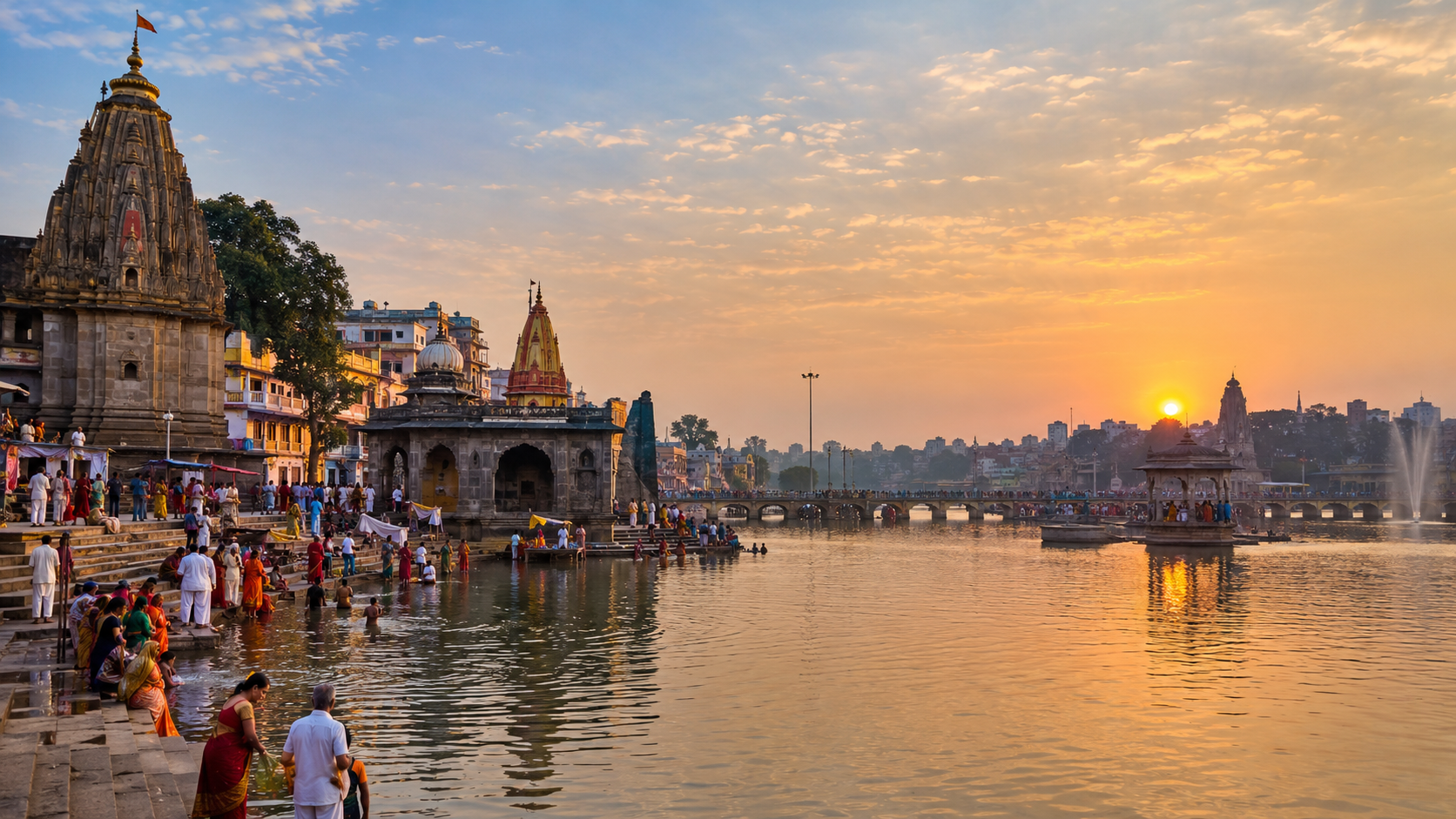
Gomti Ghat is close to Dwarkadhish Temple and is an important pilgrimage stop along the riverfront. The ghat contains smaller shrines and is traditionally associated with ritual bathing and prayer. It is an easy addition to a temple visit because of its location.
Rukmini Devi Temple
Rukmini Devi Temple is another important shrine in the Dwarka pilgrimage circuit. Incredible India places it around 2 km from Dwarkadhish Temple, making it a practical addition to a local sightseeing plan.
Nageshwar Jyotirlinga
Nageshwar is an important Shiva pilgrimage site in the wider Dwarka region and is traditionally counted among the twelve Jyotirlingas. Gujarat Tourism recommends it as one of the area's major religious attractions.
Beyt Dwarka
Beyt Dwarka can be included when time permits. The island is connected to the mainland by Sudarshan Setu, and the area has religious sites as well as coastal scenery. Current access arrangements should be checked before travelling, particularly during weather disruptions or festival periods.
Bhadkeshwar Mahadev Temple
Located near the coast, Bhadkeshwar Mahadev Temple offers a different setting from the central Dwarka shrines. Its coastal location makes tide and weather conditions relevant when planning a visit.
Dwarka Beach and Shivrajpur Beach
Travellers with additional time can include Dwarka Beach or Shivrajpur Beach in their itinerary. These stops work better as additions to a pilgrimage schedule rather than substitutes for the city's principal religious sites. Incredible India lists both among the attractions around Dwarka.
Where to Stay in Dwarka
Staying in Dwarka itself is generally the most convenient choice for travellers whose priority is temple darshan. It avoids the need to travel into the city immediately before an early temple visit and makes it easier to adjust the itinerary if darshan takes longer than expected.
Accommodation ranges from budget and pilgrim-oriented stays to hotels and guesthouses. Availability can become tighter during Janmashtami and other major festival periods, so advance booking is sensible for those dates.
When choosing accommodation, consider:
- Distance from the Dwarkadhish Temple area
- Availability of family rooms if travelling in a group
- Lift access for elderly travellers
- Parking if arriving by private car
- Early breakfast or flexible meal arrangements
- Cancellation terms during peak periods
Rather than selecting accommodation solely on distance, consider the needs of the whole group. A slightly farther hotel with easier vehicle access may be more comfortable for elderly pilgrims than a property reached through congested lanes.
Accessibility and Comfort
The temple's approach includes a substantial number of steps, which is an important consideration for elderly visitors and people with mobility limitations. Tourism sources describe the temple as standing on a small rise and being reached by a flight of steps.
Travellers with limited mobility should check current accessibility arrangements directly with the temple or local authorities before visiting. Do not assume that every area of an old temple complex will be accessible by lift or ramp.
For families travelling with young children or older relatives, a less crowded visiting period can make the experience easier. Carry only essential items and allow sufficient time rather than trying to fit the temple into a tightly timed sightseeing schedule.
Practical Planning Tips for a Dwarka Pilgrimage
A well-planned Dwarka visit does not need to be complicated. Keep the temple as the anchor of the itinerary and arrange the other sights around it.
- Check the latest Dwarkadhish Temple timings before leaving your hotel.
- Plan extra time for queues and security, particularly during festivals.
- Stay in Dwarka if the main purpose of the trip is darshan.
- Keep clothing and footwear suitable for a religious site and local weather.
- If travelling with elderly family members, account for the temple steps and walking involved.
- Combine nearby sights geographically instead of crossing the town repeatedly.
- Reserve accommodation early for Janmashtami and other major festival periods.
- Confirm transport arrangements for Beyt Dwarka and other outlying attractions before starting the day.
- Treat unofficial claims about special entry, guaranteed darshan or priority access with caution.
- Keep a flexible schedule because temple rituals, crowds and local arrangements can affect the day's timing.
Planning Your Visit to Dwarkadhish Temple
A visit to Dwarkadhish Temple is easiest when treated as the centre of a wider Dwarka pilgrimage. The temple provides the main spiritual focus, while Gomti Ghat, Rukmini Devi Temple, Nageshwar Jyotirlinga, Beyt Dwarka and the coastal attractions give travellers reasons to stay longer.
For the smoothest experience, confirm current temple timings and local arrangements close to the date of travel, especially during festival periods. Gujarat Tourism and the Ministry of Tourism's Incredible India portal are useful starting points for current destination information, while specific temple arrangements should be confirmed with the relevant local authorities.
If you are planning a pilgrimage to Dwarka and want help arranging transport, accommodation and the surrounding temple circuit, Trip to Yatra can help you build a practical itinerary around your travel dates and priorities. Get in touch with Trip to Yatra to discuss your Dwarka pilgrimage plans and organise the trip with the key details covered before you travel.