
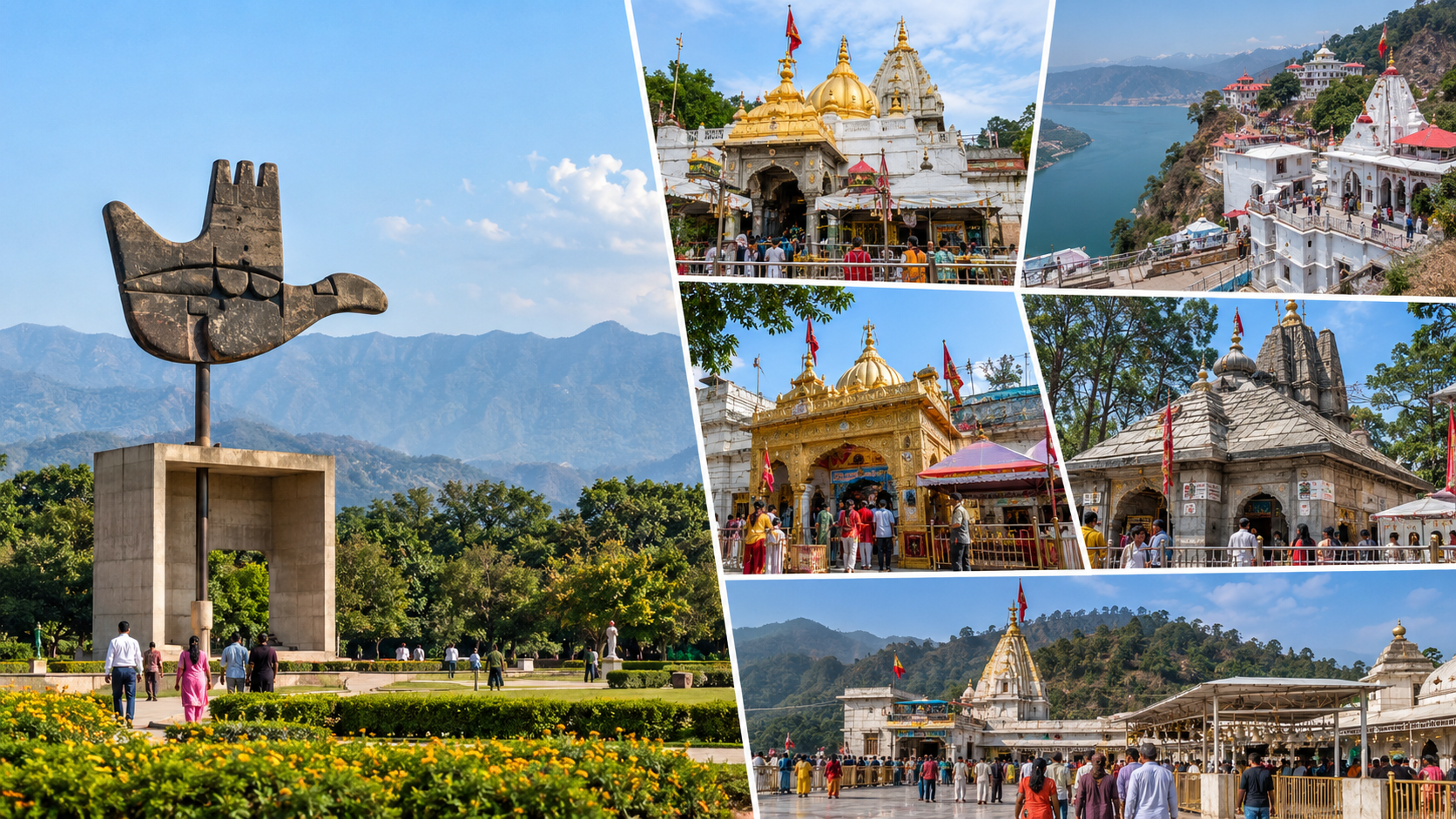
Chamunda Devi Temple
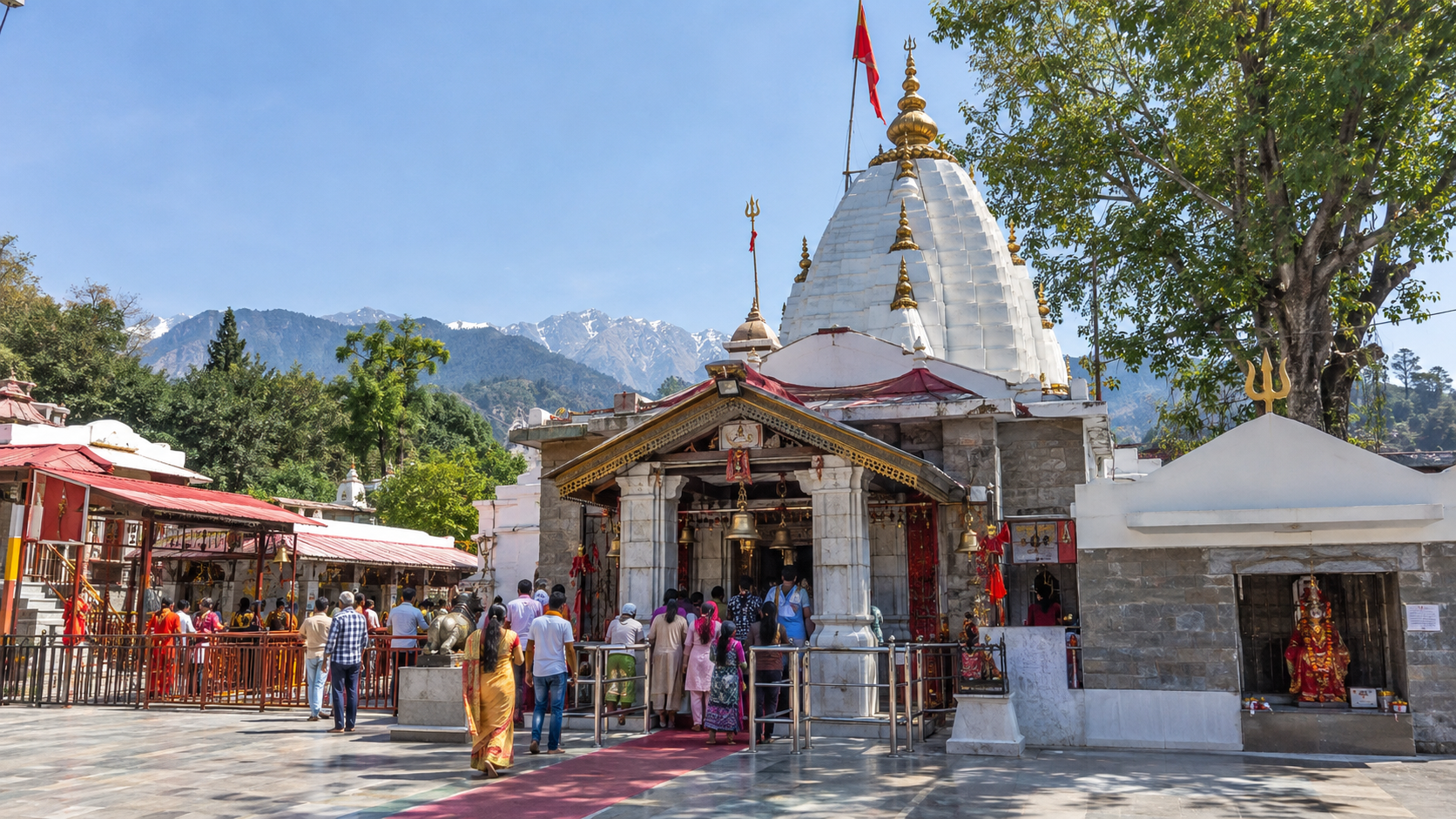
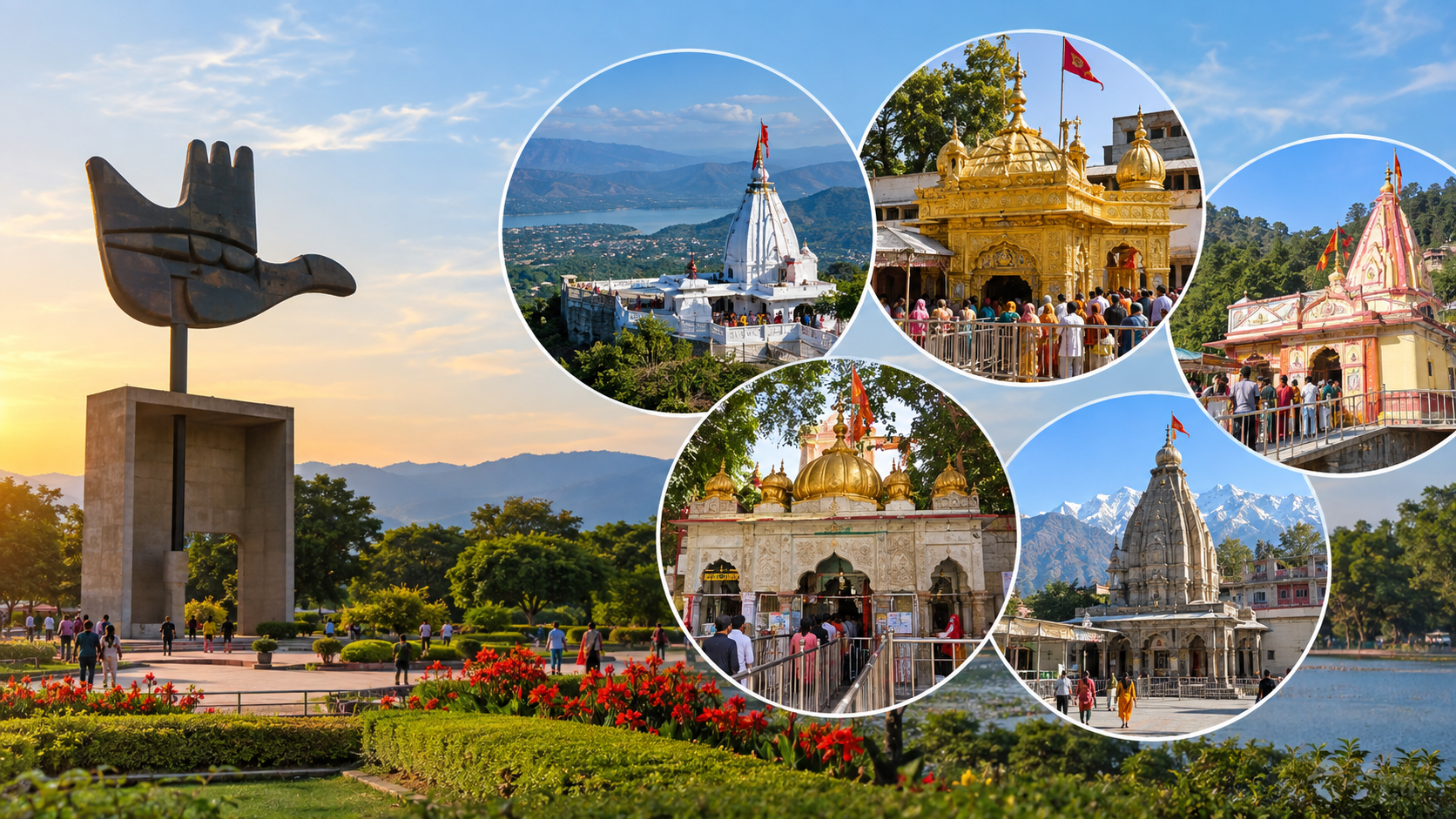
Chamunda Devi Temple, also known as Chamunda Nandikeshwar Dham, is a revered shrine on the Baner River in Kangra, Himachal Pradesh. Close to Dharamshala and Palampur, it attracts pilgrims seeking darshan of Chamunda Devi as well as travellers exploring Kangra’s sacred and cultural landscape. The temple complex is accessible by road and can be combined with several nearby attractions.
Chamunda Devi Temple: A Practical Pilgrimage Guide
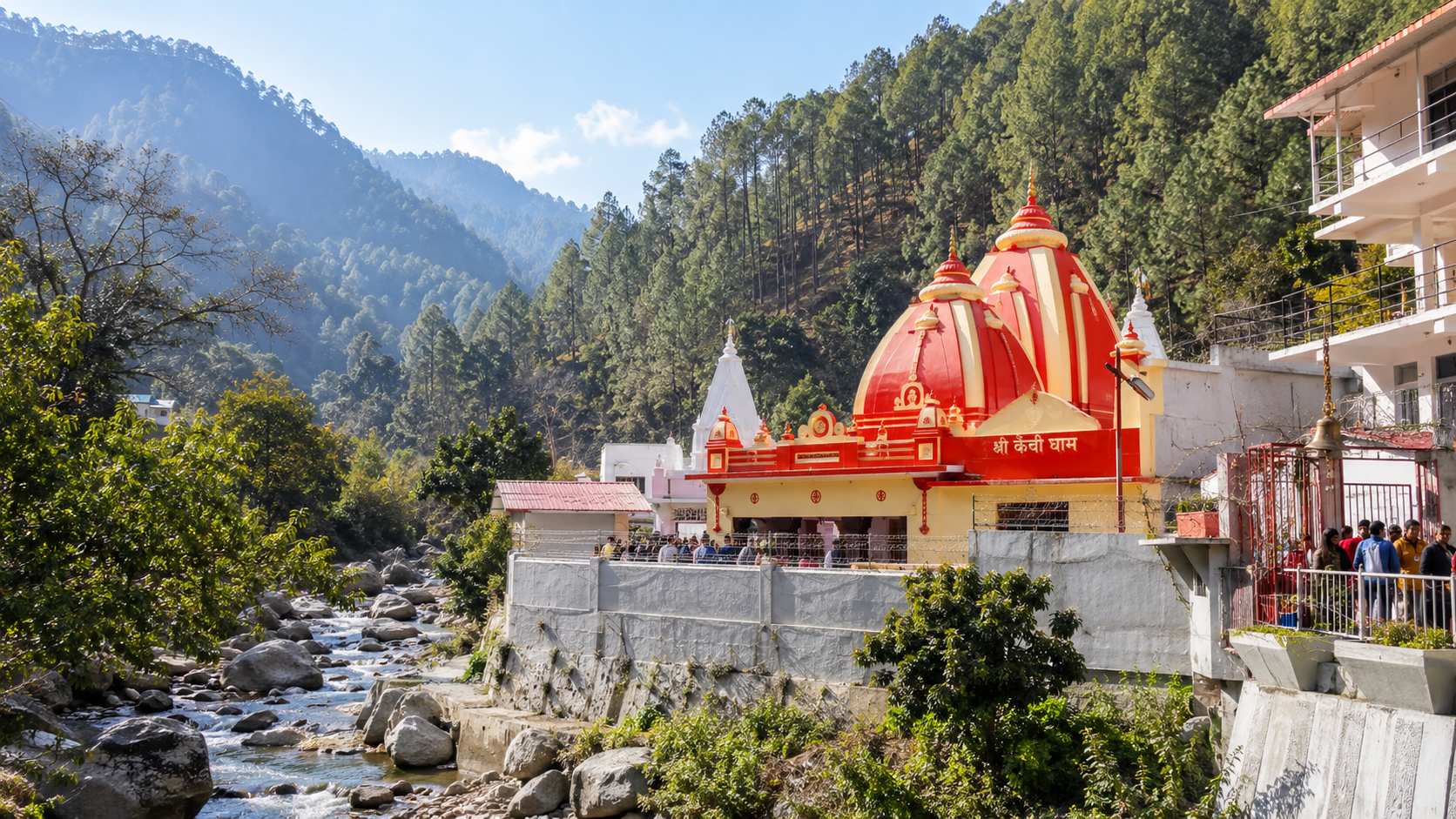
Chamunda Devi Temple is a major Hindu pilgrimage shrine in Kangra district of Himachal Pradesh, situated at Padar on the banks of the Baner River and surrounded by views of the Dhauladhar ranges. The shrine is widely known as Chamunda Nandikeshwar Dham, reflecting the temple’s association with both Goddess Chamunda and Lord Shiva. It is about 14–15 km from Dharamshala and around 19 km from Palampur, making it a convenient pilgrimage stop for travellers staying in either town.
For pilgrims, the main reason to visit is darshan of Chamunda Devi, regarded as a fierce form of Goddess Durga. The temple is also important within Himachal Pradesh’s Shakti tradition. Himachal Tourism lists Chamunda among the state’s five Shaktipeeth pilgrimage sites.
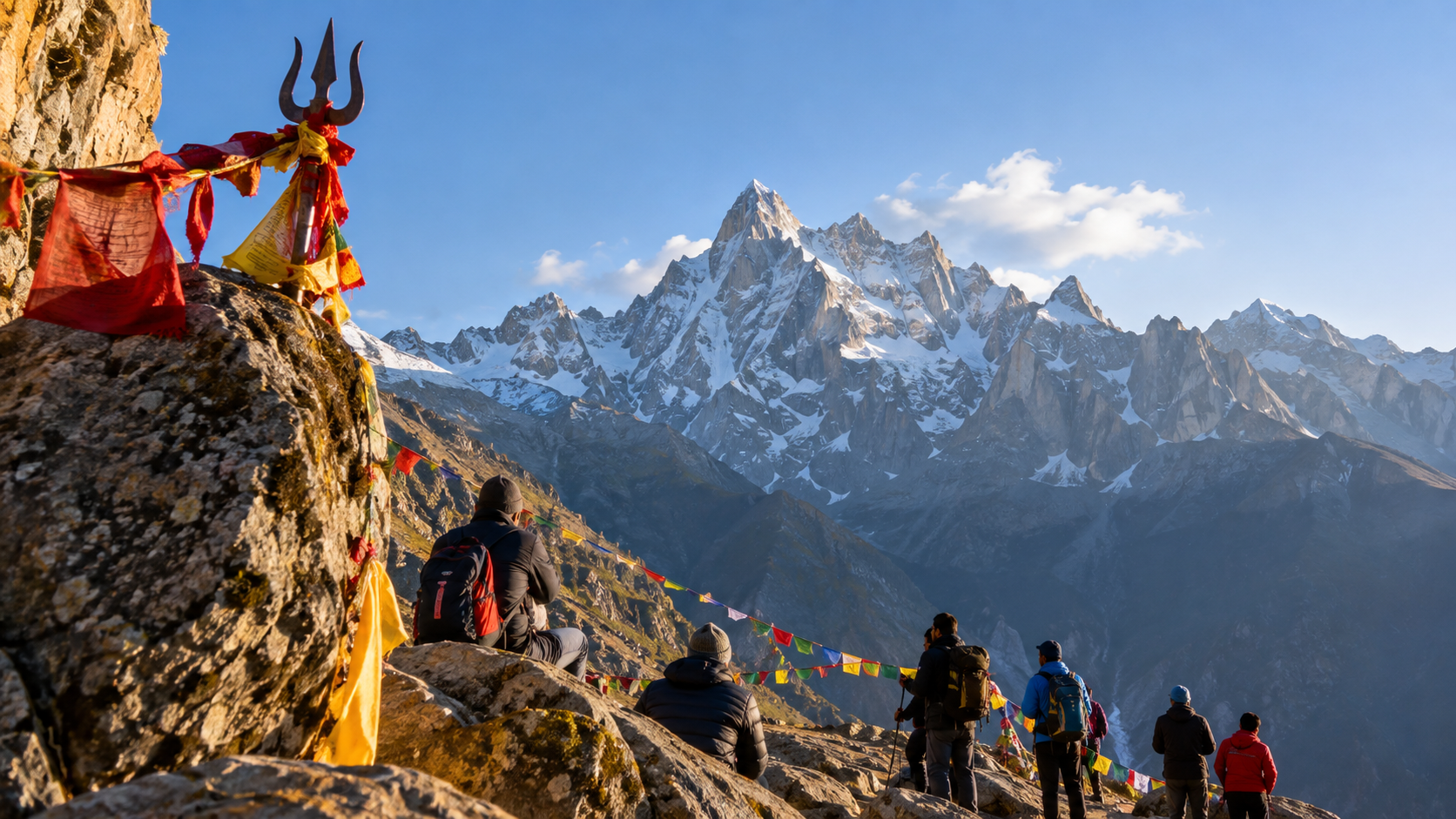
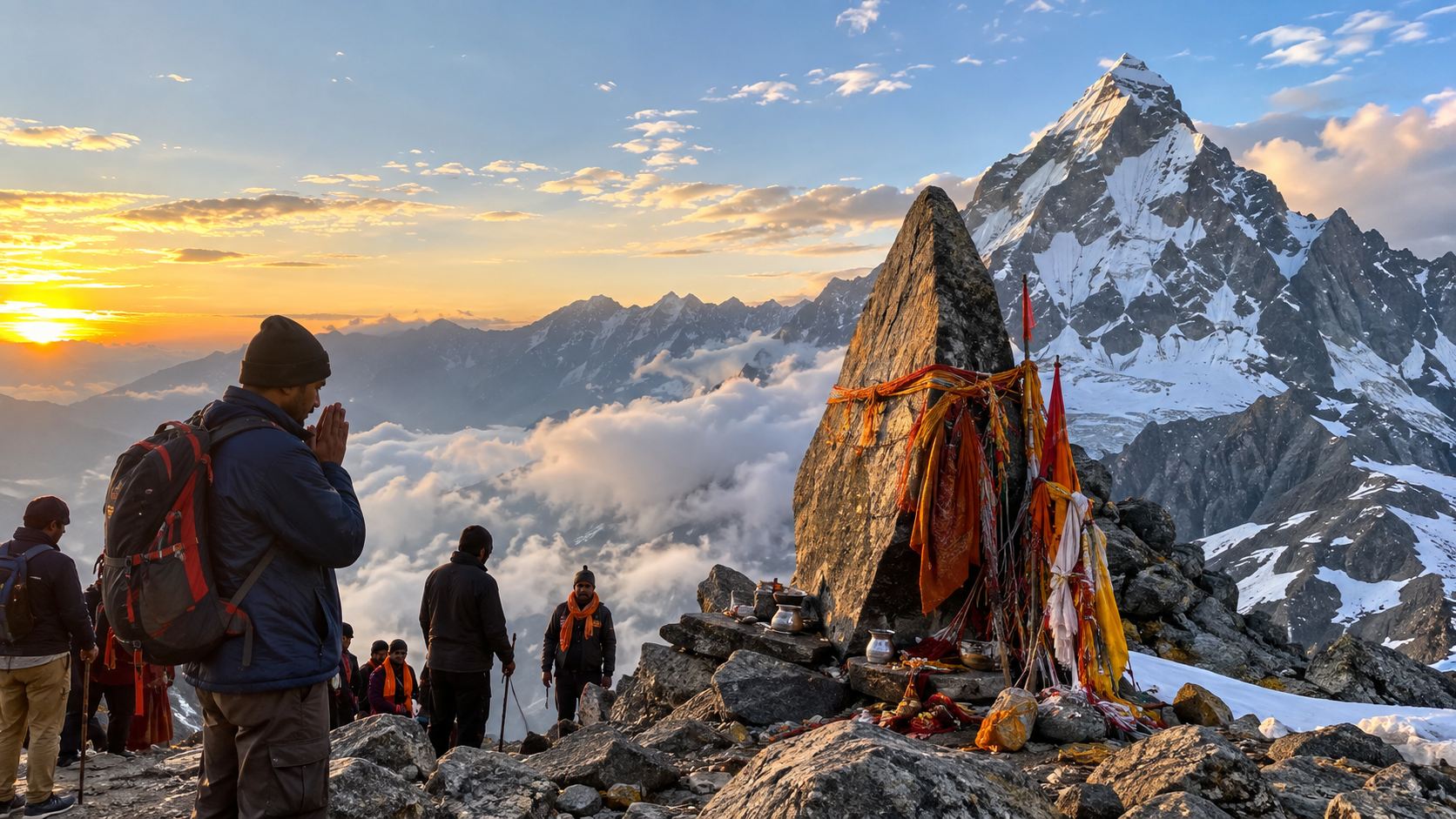
The present temple is considerably easier to reach than Aadi Himani Chamunda, the older hilltop shrine associated with the tradition of Chamunda worship in the area. That makes the valley temple suitable for travellers who want a meaningful pilgrimage without undertaking a high-altitude trek.
Spiritual Importance of Chamunda Devi Temple
Chamunda Devi is traditionally associated with the fierce aspect of the Goddess. The name Chamunda is linked in Hindu mythology with Chanda and Munda, two demons who were defeated by the Goddess. The temple’s official account connects this tradition with the Devi Mahatmya and identifies Chamunda as a form of Goddess Durga.
The shrine is popularly called Chamunda Nandikeshwar Dham. Within the temple complex, the main shrine is associated with Chamunda Devi, while a Shiva shrine with a Shiva Lingam is located within the complex. The combination of Devi and Shiva worship is central to the temple’s religious identity.
Himachal Pradesh has a strong Shakti pilgrimage circuit, and Chamunda can be included alongside other important Kangra-area shrines such as Bajreshwari Devi Temple in Kangra and Jwala Ji Temple at Jwalamukhi. Travellers interested in a broader pilgrimage itinerary can therefore use Dharamshala, Kangra or Palampur as a base.
Chamunda Devi Temple History and Legend
The history of the shrine combines documented regional heritage with religious tradition, so the two should not be treated as the same type of evidence.
The Kangra district temple authorities describe the present shrine as an ancient temple associated with a 16th-century tradition. A local legend tells of a king and a Brahmin priest who wished to move the deity from a difficult-to-access location to a more accessible site. According to the story, the Goddess appeared to the priest in a dream and indicated where the sacred idol could be found. The idol was subsequently recovered and installed at the present location.
Himachal Tourism describes the temple as more than 400 years old and records a related local tradition in which Devi Chamunda appeared to a Brahmin in a dream and directed the establishment of the temple.
These accounts are best understood as temple and local traditions rather than independently established historical facts. Visitors interested in the religious history of the site will find the legends an important part of the pilgrimage experience.
The older Aadi Himani Chamunda shrine lies high in the Dhauladhar range. Himachal Tourism describes it as being approximately 16 km by trekking route from the Chamunda temple, while the Palampur tourism information describes the hilltop shrine at around 2,900 metres and notes different trekking approaches.
Chamunda Devi Temple Timings and Darshan
The temple’s current official information gives different opening hours for summer and winter. Travellers should check the temple administration before setting out because timings can change during festivals, special observances and other religious events.
Winter temple timings:
• Morning: 6:00 AM to 12:00 PM
• Bhog break: 12:00 PM to 1:00 PM
• Afternoon/evening: 1:00 PM to 9:00 PM
Summer temple timings:
• Morning: 5:00 AM to 12:00 PM
• Bhog break: 12:00 PM to 1:00 PM
• Afternoon/evening: 1:00 PM to 10:00 PM
The official temple website currently lists morning aarti from 8:00 AM to 8:45 AM and evening aarti from 7:10 PM to 7:50 PM in both seasons.
Because religious schedules can be revised, particularly around Navratri and other important occasions, confirm the latest schedule if attending a specific aarti is an important part of your visit. The Kangra temple administration also provides online darshan-related services through its official temple portal.
A useful planning approach is to arrive 20–30 minutes before the period you want to attend, especially during festival days when visitor numbers can rise substantially.
Darshan Etiquette and Temple Visit Tips
Chamunda Devi Temple is an active place of worship rather than simply a sightseeing attraction. Visitors should plan their visit with the atmosphere of a working temple in mind.
• Wear modest, comfortable clothing suitable for a religious site.
• Follow instructions from temple staff and security personnel.
• Keep mobile phones and personal belongings under control in crowded areas.
• Do not obstruct queues while taking photographs outside permitted areas.
• Avoid assuming that photography is permitted everywhere inside the complex.
• Respect worshippers who are performing prayers, offerings or rituals.
• If you wish to attend aarti, arrive early rather than trying to enter at the last moment.
• During busy festival periods, allow extra time for parking, queues and local traffic.
The temple authorities list facilities including drinking water, toilets, parking, security arrangements and cleanliness services. A free langar is also operated by the temple trust, with published daily meal timings of 12:00 PM–2:00 PM and 7:00 PM–9:00 PM.
Do not rely on these facilities as a substitute for personal preparation. Elderly travellers, families with children and people travelling during crowded periods should carry essential medicines, drinking water and any personal requirements.
Best Time to Visit Chamunda Devi Temple
Chamunda Devi Temple can be visited throughout the year. The Kangra temple authorities specifically state that pilgrims can visit in all seasons.
For a quieter and more comfortable pilgrimage, consider travelling outside the busiest festival dates. For those who want to experience the temple during major religious celebrations, Navratri is particularly significant. The temple observes Chaitra Navratri, Sharad Navratri and Shravan Gupta Navratri, along with Shivratri and other religious occasions.
Festival periods can be spiritually rewarding but are also likely to involve heavier crowds and more demand for local transport and accommodation. If you are travelling with elderly family members or have a fixed sightseeing schedule, a non-festival visit may be easier to manage.
The surrounding Kangra landscape is also influenced by seasonal weather. Summer is generally more suitable for combining temple visits with sightseeing, while monsoon travel requires attention to rain and road conditions. Winter mornings and evenings can be cold, so warm clothing is advisable.
How to Reach Chamunda Devi Temple
Chamunda Devi Temple is well connected by road with Dharamshala, Palampur and other parts of Kangra district.
By Air
Kangra Airport, also known as Gaggal Airport, is the closest airport for travellers flying into the region. The District Kangra administration gives the airport distance as approximately 18 km from the temple.
From the airport, travellers can continue by taxi or other local road transport. Flight schedules to Kangra can vary by season, so check the operating airline and service status before finalising a journey around a particular flight.
By Train
Pathankot Junction is the main broad-gauge railway gateway commonly used for reaching the Kangra region. The district administration lists Pathankot Junction at about 100 km from Chamunda Nandikeshwar Dham. Amb Andaura is another rail option but is farther away, at approximately 120 km according to the current district information.
The Kangra Valley also has a narrow-gauge railway connection from Pathankot towards Jogindernagar. The journey is scenic, but travellers should treat it as a travel experience rather than the fastest option for reaching the temple.
By Road
Road travel is the most practical option for most pilgrims. The temple is approximately 15 km from Dharamshala and around 19 km from Palampur according to current temple information, although road distance can vary with the route used.
The District Kangra administration lists Dharamshala Bus Stand at about 15 km from the temple. Himachal Pradesh also has bus and taxi services connecting the main towns and pilgrimage destinations.
If you are building a pilgrimage itinerary, Dharamshala and Palampur are both practical bases. Kangra town is another useful starting point if your itinerary includes Kangra Fort and Bajreshwari Devi Temple.
Local Transport and Getting Around
Taxis and local buses are the most useful options for reaching Chamunda Devi Temple from nearby towns. A private taxi can be convenient for families or travellers planning several temples and attractions in the same day.
Local road conditions and traffic can affect journey times, particularly during Navratri and other major religious occasions. Avoid building a tightly timed itinerary around a specific darshan or aarti if your route includes several stops.
For Aadi Himani Chamunda, the planning requirements are very different. It is a hilltop pilgrimage involving a substantial trek rather than a conventional road-access temple visit. Himachal Tourism describes the route as demanding and notes approaches from Jadrangal and Jia.
Accessibility and Practical Comfort
The main Chamunda Devi Temple is the accessible valley shrine and is considerably easier to visit than Aadi Himani Chamunda. The temple authorities list vehicle parking, water and toilet facilities and security arrangements for pilgrims.
Even so, visitors should expect a functioning pilgrimage complex rather than a fully controlled tourist attraction. Queues, uneven surfaces, crowds and religious activity may make the experience more demanding for some elderly travellers or people with limited mobility.
If you are travelling with an elderly person, discuss the practical requirements with your driver or hotel before leaving. For a person with significant mobility limitations, it is sensible to confirm current access arrangements with the temple administration in advance rather than assuming that every part of the complex will be step-free.
Stay and Accommodation Near Chamunda Devi Temple
For accommodation, Dharamshala and Palampur provide a wider choice than the immediate temple area. Staying in one of these towns also makes it easier to combine the pilgrimage with sightseeing.
Dharamshala is particularly convenient for travellers who want to visit Chamunda Devi Temple along with McLeod Ganj, Bhagsu and other attractions around the Dharamshala area. Palampur works well for travellers combining the temple with tea gardens, Gopalpur and the wider Kangra Valley.
The temple trust also operates facilities for pilgrims, and its official temple portal includes an online sarai booking service. Availability should be checked directly before relying on temple accommodation for a particular date.
During Navratri and other major festivals, accommodation can become more difficult to secure. Booking ahead is advisable, particularly for families and larger groups.
Nearby Places to Visit
Chamunda Devi Temple can easily form part of a wider Kangra pilgrimage and sightseeing circuit.
Dharamshala and McLeod Ganj
Dharamshala is one of the most convenient bases for visiting the temple. McLeod Ganj adds Tibetan cultural and spiritual attractions to a pilgrimage itinerary. The temple authorities list the Dalai Lama Temple and Bhagsu Nag among the nearby places that can be combined with a visit to Chamunda.
Kangra Fort
Kangra Fort is an important historical attraction and a natural addition for travellers interested in the region’s history. Himachal Tourism describes it as one of the oldest and largest forts in the Himalayas, with strong connections to the Katoch rulers of Kangra.
Bajreshwari Devi Temple, Kangra
Bajreshwari Devi Temple in Kangra town is another important Devi shrine. It can be combined with Chamunda as part of a Kangra pilgrimage circuit. Kangra town is approximately 30 km from Chamunda according to the current temple authority information.
Palampur
Palampur is a practical base for pilgrims who also want to explore the tea-growing landscape of Kangra. Himachal Tourism lists Chamunda Devi Temple at approximately 25 km from Palampur in its broader destination information, while the temple authority currently gives a figure of around 19 km; the difference reflects route and measurement variations.
Aadi Himani Chamunda
Aadi Himani Chamunda is the more demanding extension of the pilgrimage. It lies at high elevation in the Dhauladhar range and requires trekking. It should be planned separately from an ordinary visit to the main Chamunda Devi Temple.
A Simple One-Day Pilgrimage Plan
For travellers staying in Dharamshala or Palampur, a practical day can be organised as follows:
- Start early and travel to Chamunda Devi Temple.
- Allow sufficient time for darshan and exploring the temple complex.
- If desired, plan the visit around the published aarti schedule after reconfirming it locally.
- Have lunch in the temple langar if the service is operating at the time of your visit, or use a nearby eating place.
- Continue towards Dharamshala, Palampur or Kangra depending on your wider itinerary.
- Add one or two nearby attractions rather than trying to cover the entire Kangra Valley in one day.
Travellers planning a multi-temple pilgrimage can instead build a longer circuit around Chamunda, Kangra, Jwalamukhi and other major shrines. Allow additional time during Navratri because roads and temple areas can become significantly busier.
Practical Tips Before You Travel
• Check the latest temple timings immediately before departure, especially if you are travelling for aarti.
• Confirm festival-day arrangements if your visit falls during Navratri or another major religious occasion.
• Carry a small amount of cash for local purchases and offerings even if you plan to use digital payments.
• Wear footwear that is easy to remove and carry if required by temple rules.
• Keep valuables to a minimum in crowded pilgrimage areas.
• If travelling during monsoon, allow additional road time and check local weather conditions.
• For Aadi Himani Chamunda, prepare for a genuine mountain trek rather than treating it as an extension of the main temple visit.
• Families travelling with older adults should plan rest stops and avoid an overly crowded itinerary.
• Use official temple or district administration information for the latest timings and booking arrangements.
A Meaningful Stop in the Kangra Pilgrimage Circuit
Chamunda Devi Temple brings together the religious traditions of Goddess Chamunda, the Shiva-Shakti association represented by Chamunda Nandikeshwar Dham, and the distinctive mountain setting of the Kangra Valley. Its location near Dharamshala and Palampur makes it relatively easy to include in a wider Himachal pilgrimage.
For travellers, the most useful approach is to plan around the actual temple schedule rather than treating the shrine as a quick sightseeing stop. Allow time for darshan, respect the rhythm of worship and check current arrangements before travelling. If you are planning a family pilgrimage, a temple circuit or a longer Kangra holiday, Trip to Yatra can help you organise the practical details around your Chamunda Devi Temple visit.