
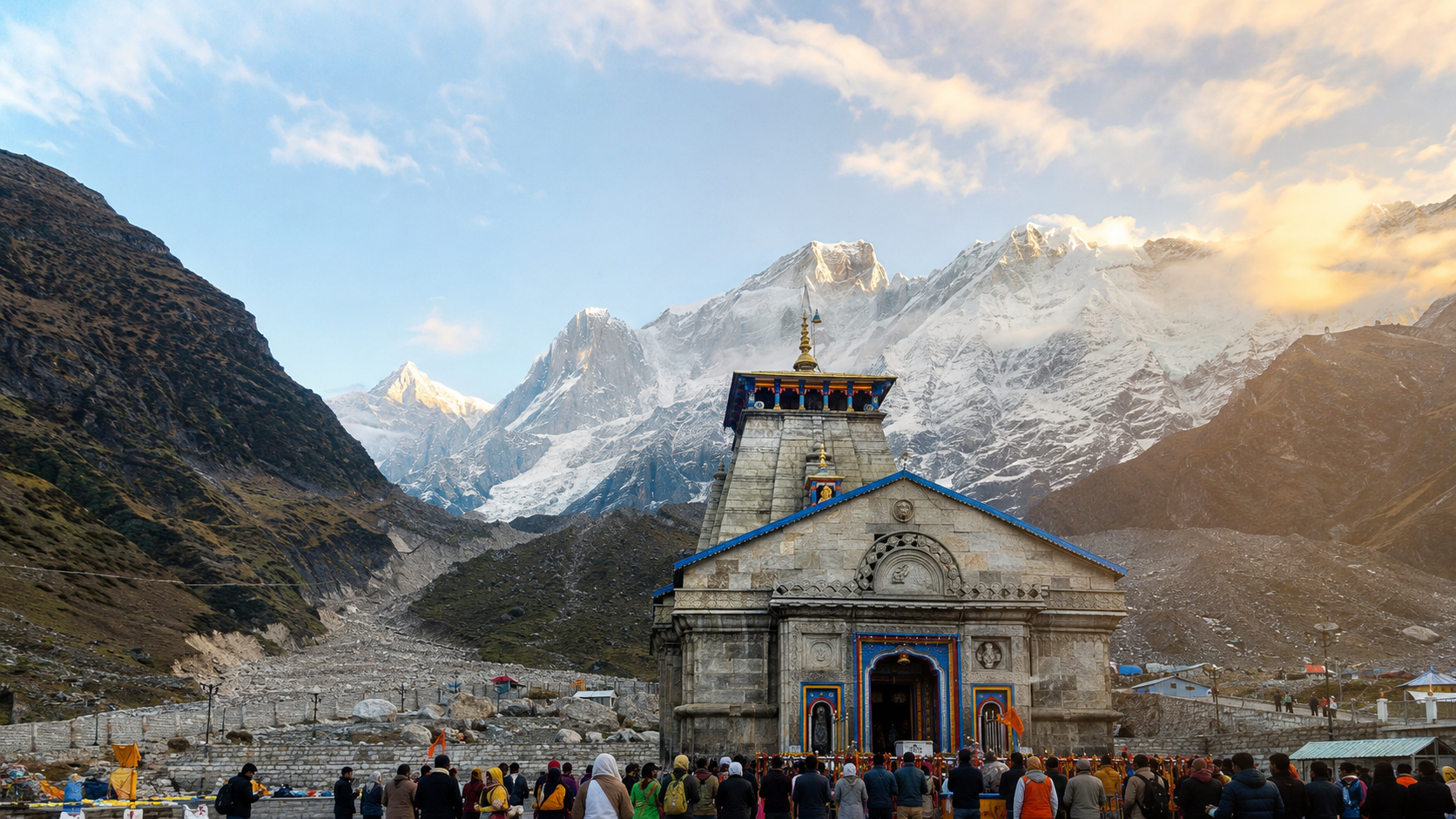
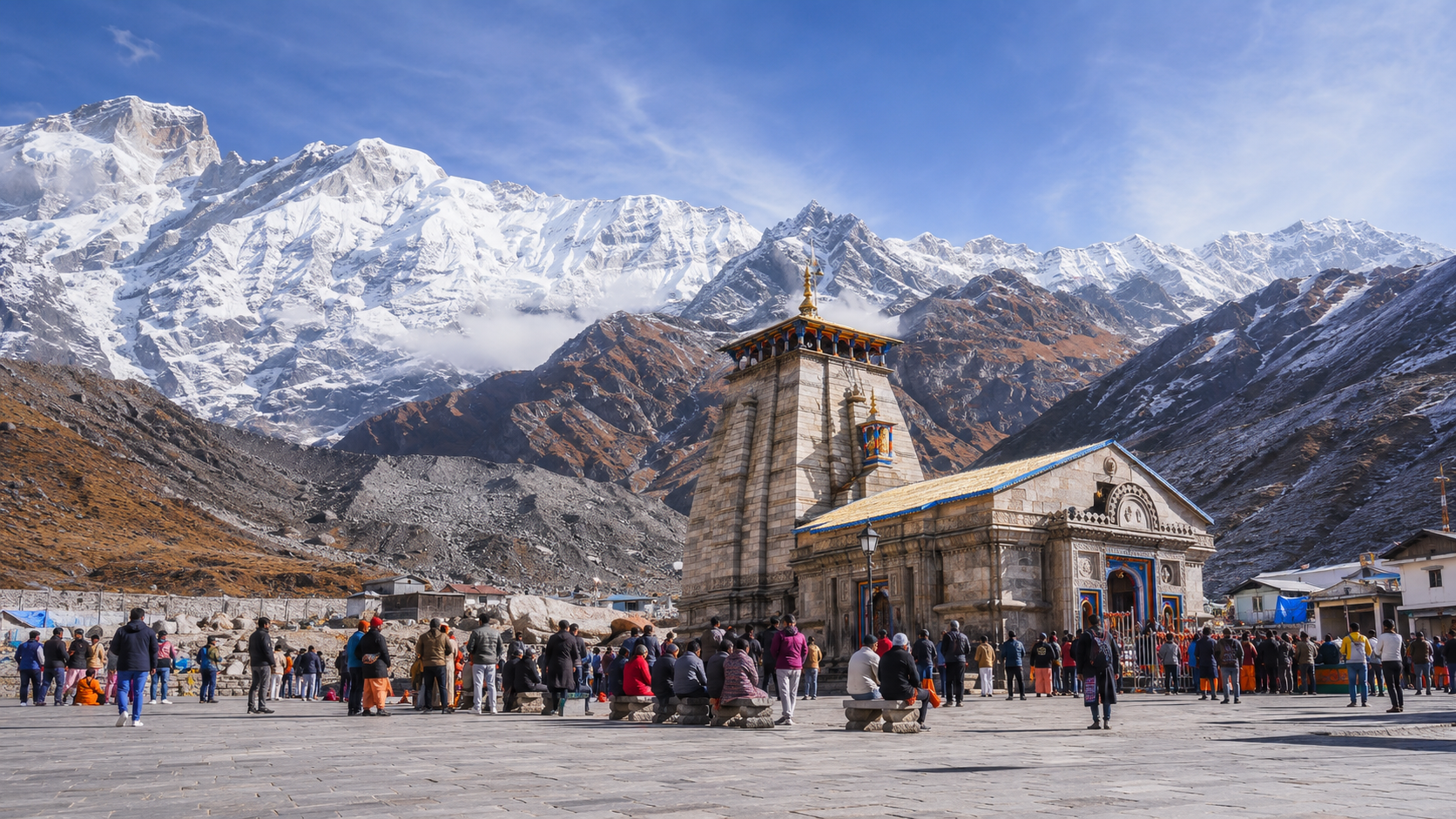
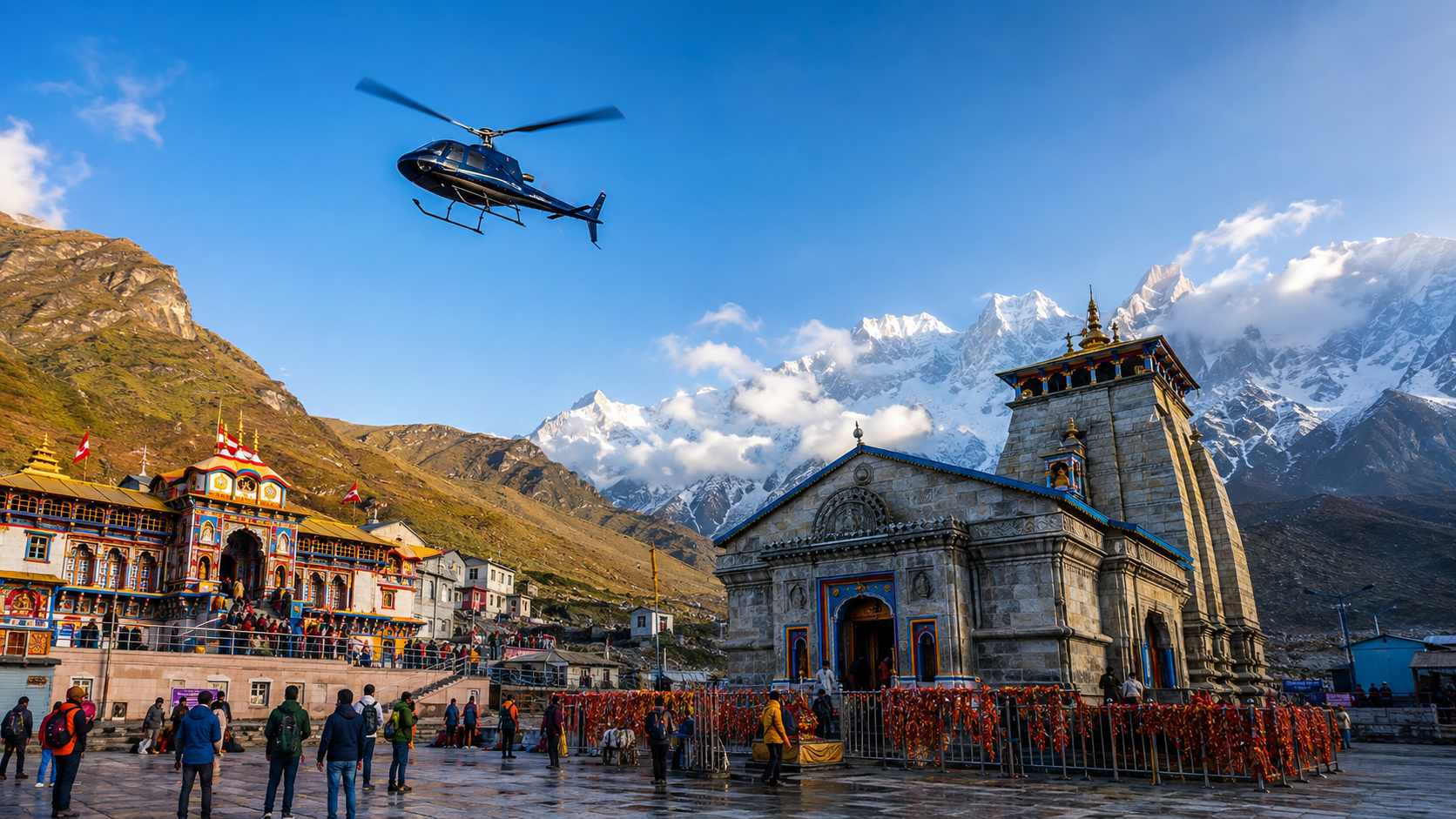
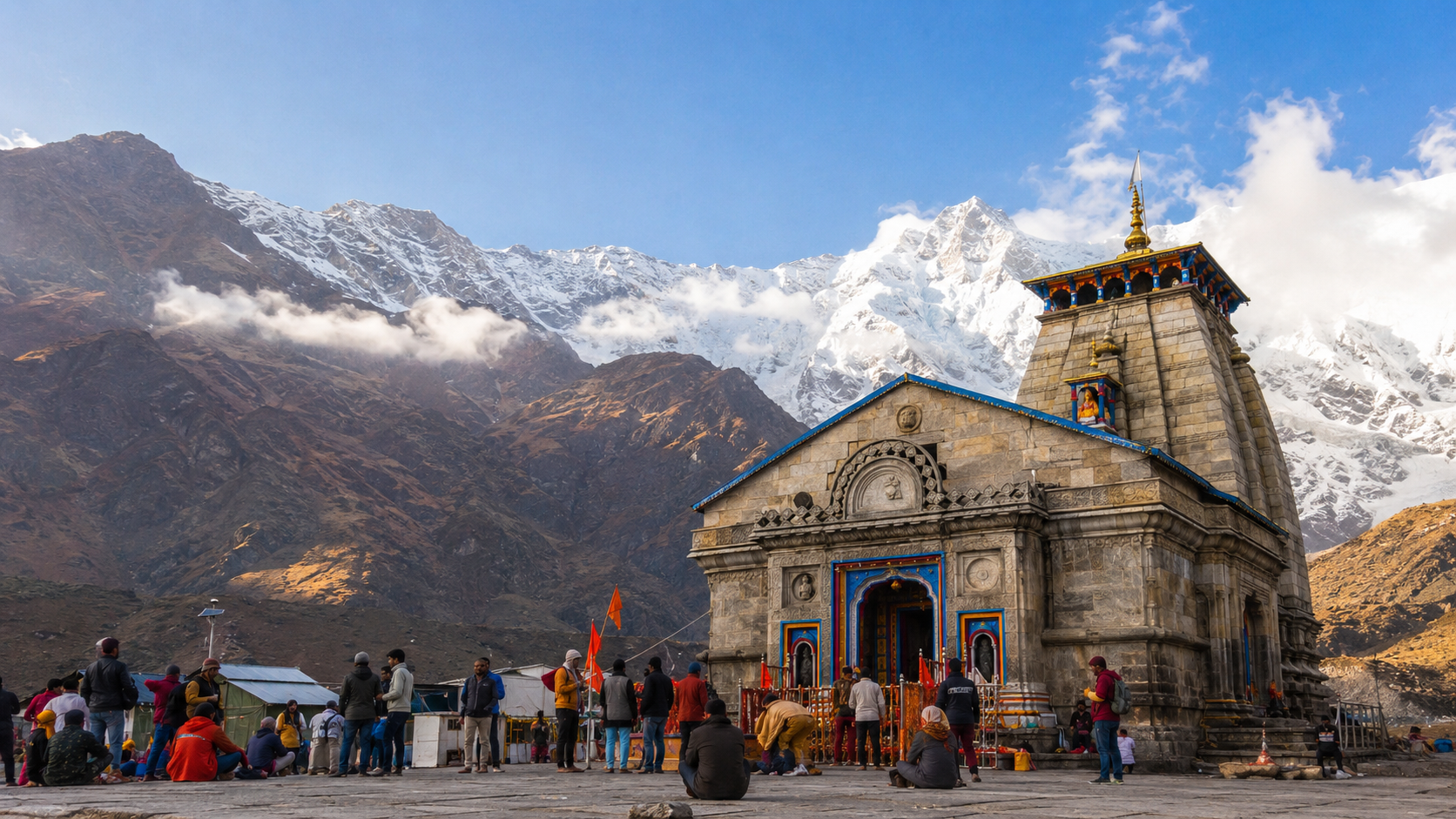
Amarnath Cave Shrine
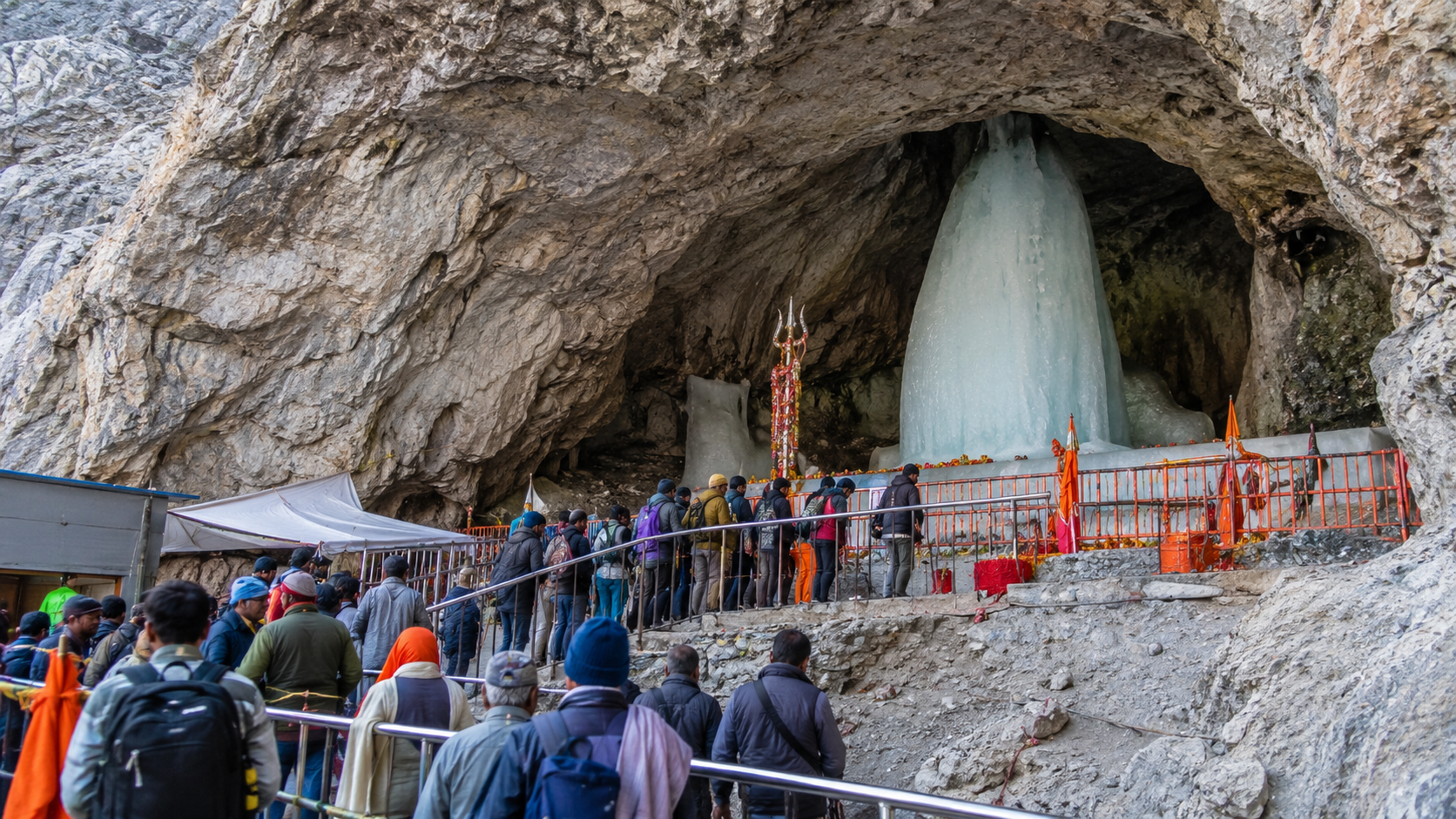
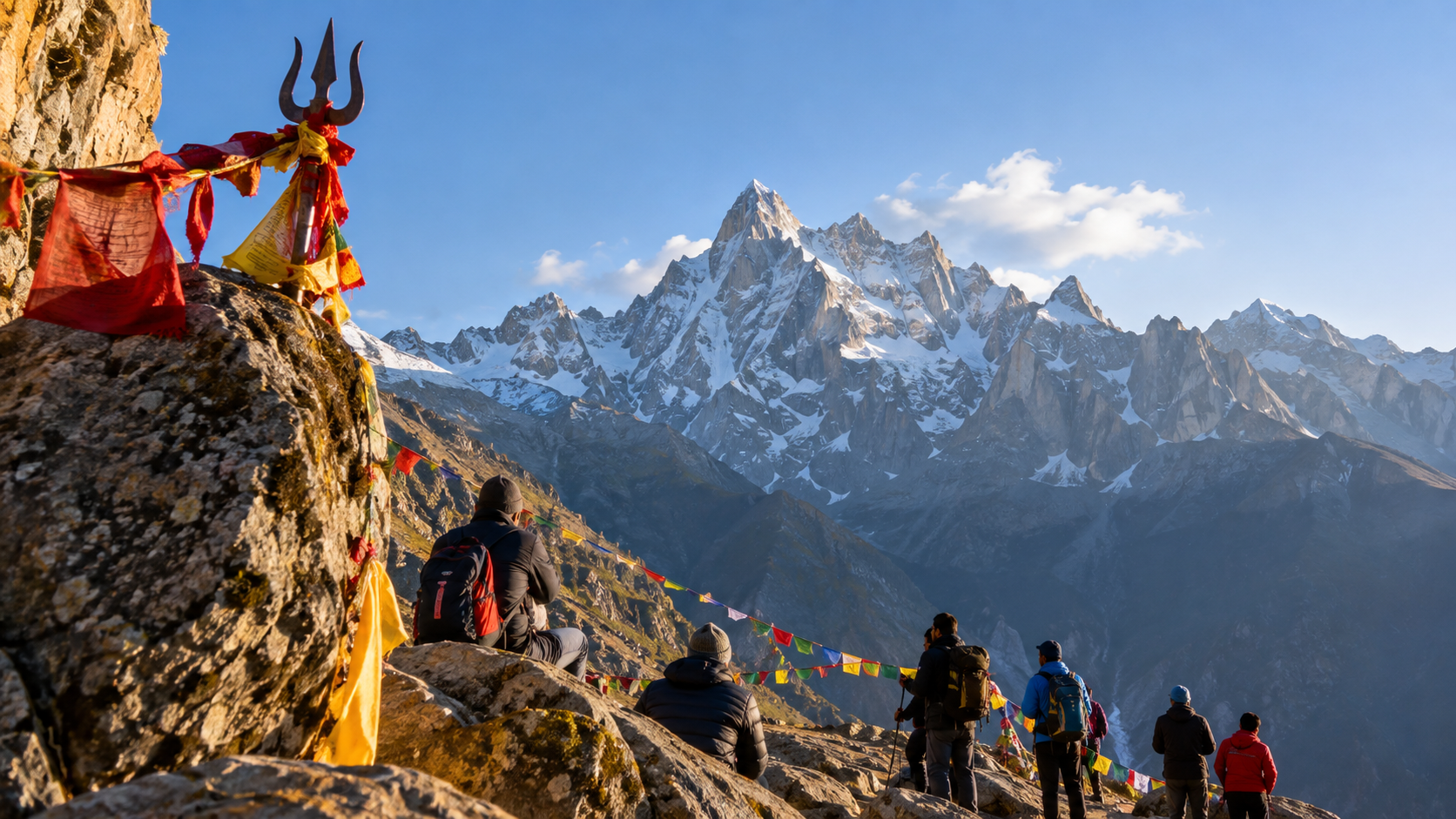
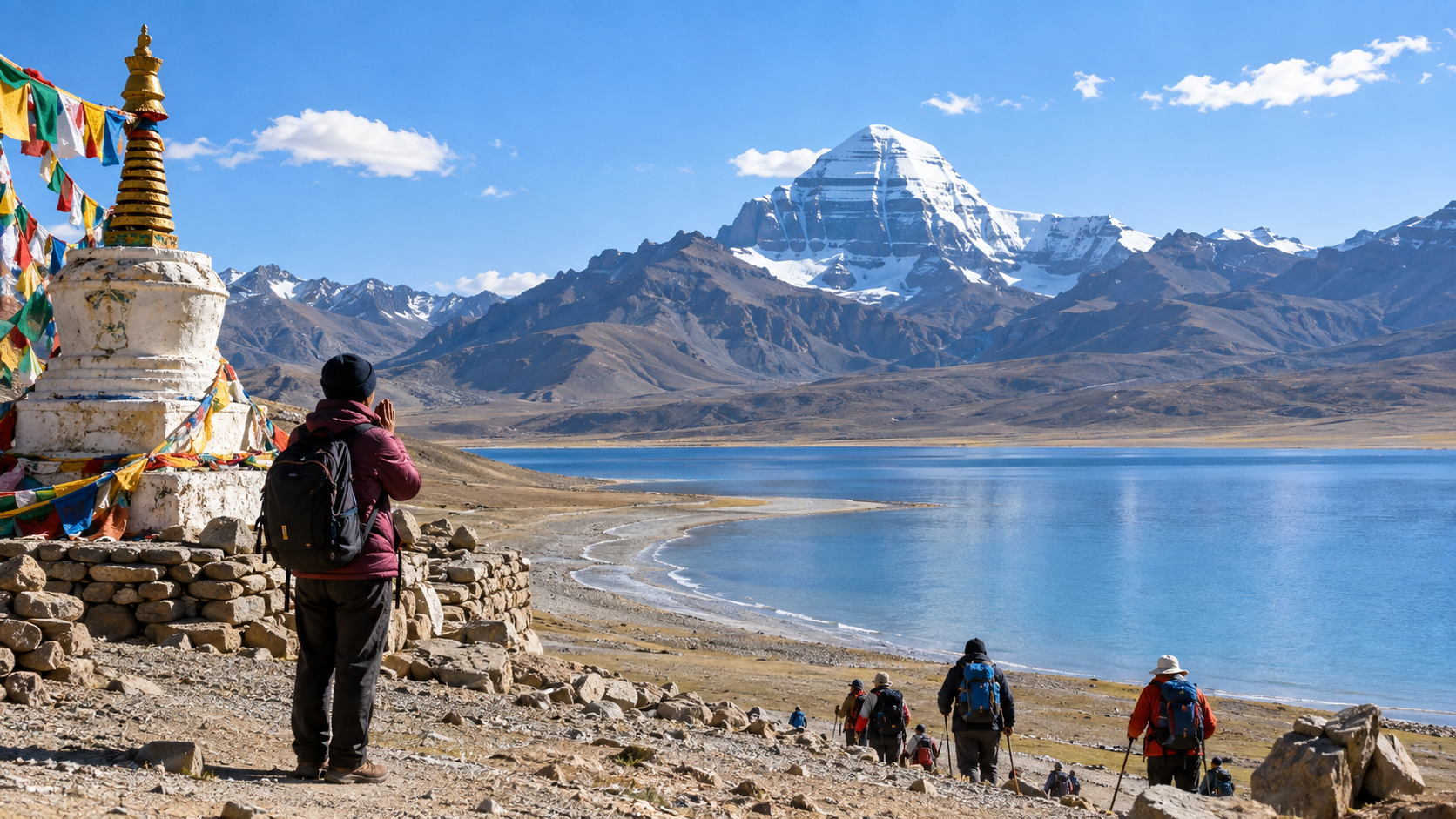
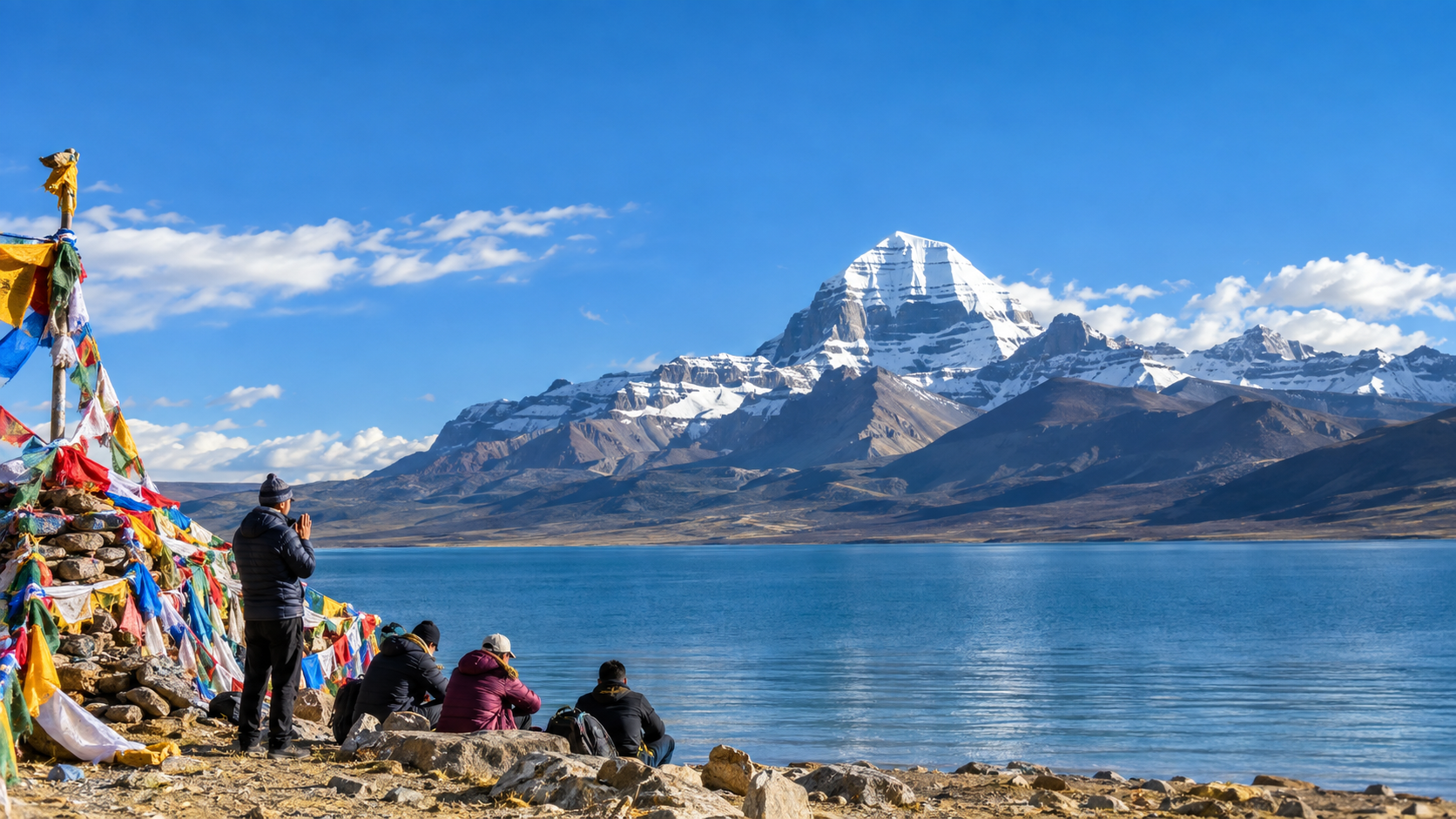
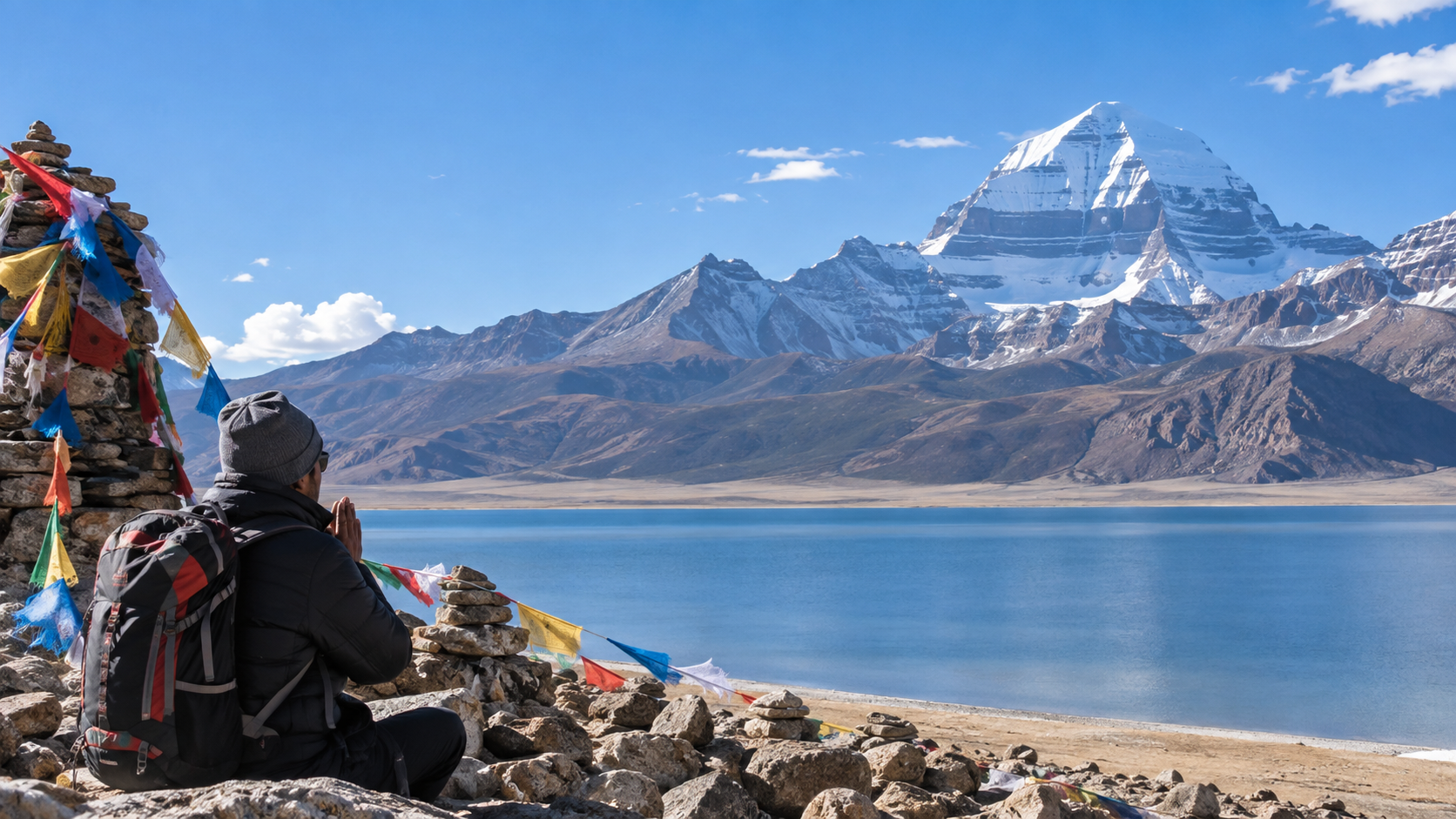
Amarnath Cave Shrine is one of Kashmir’s most revered pilgrimage destinations, visited during the annual Shri Amarnathji Yatra. Set high in the Kashmir Himalayas, the cave is associated with the naturally formed ice Shivling and is approached through the Baltal or Pahalgam route. This guide covers registration, darshan, travel logistics, accommodation and practical planning.
Amarnath Cave Shrine: An Overview
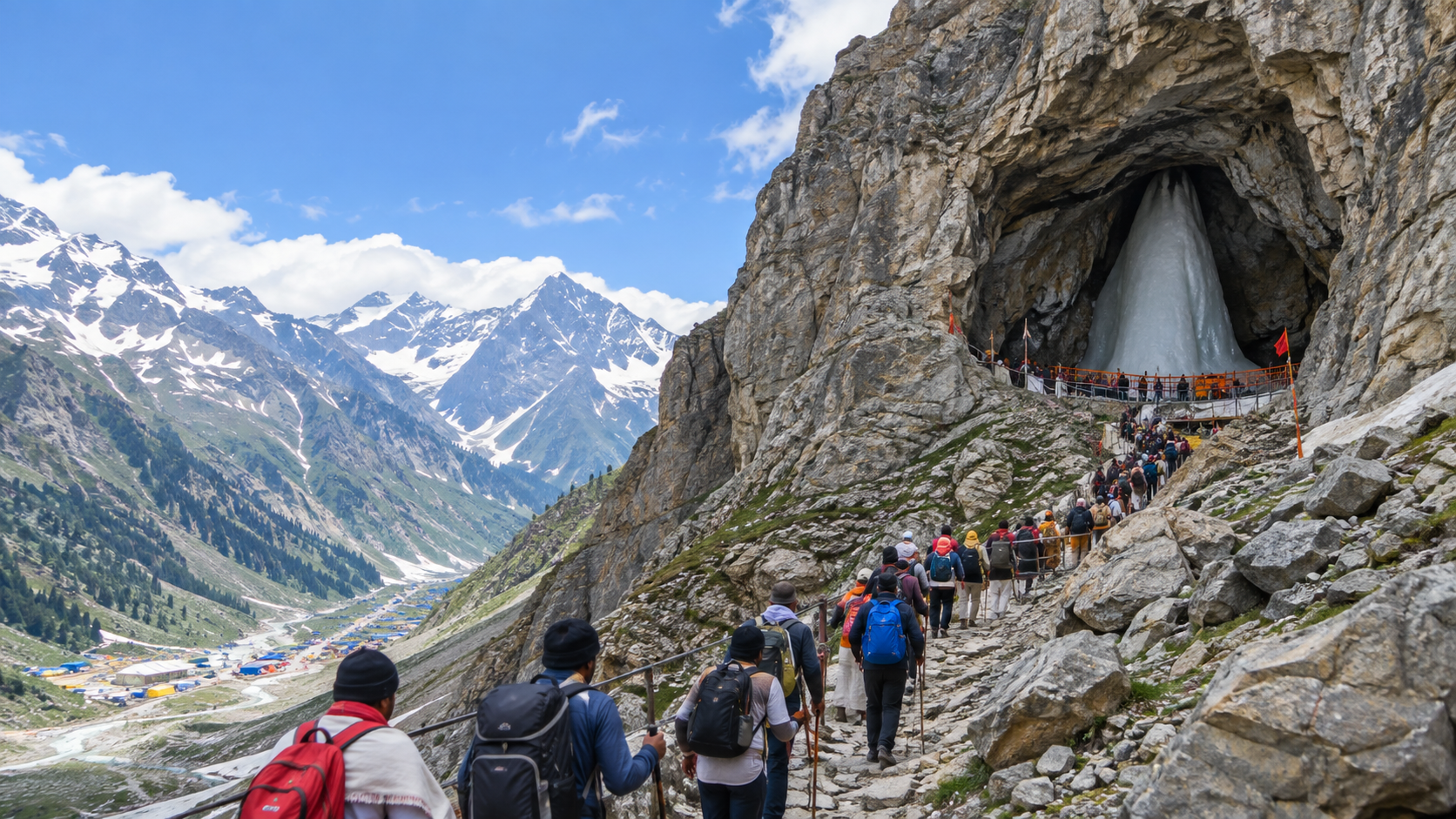
The Amarnath Cave Shrine is a revered Hindu pilgrimage site in the Kashmir Himalayas, at an altitude of about 3,888 metres. The cave is associated with Lord Shiva and the naturally formed ice lingam that devotees traditionally regard as a manifestation of Shiva. The annual pilgrimage is conducted during the summer months when the high-altitude routes can be opened and managed for pilgrims. The shrine is administered by the Shri Amarnathji Shrine Board (SASB).
For travellers, the Amarnath Cave is not a conventional sightseeing stop. Reaching the shrine involves a high-altitude mountain journey, regulated access and preparation for rapidly changing weather. Pilgrims can approach the Holy Cave through two principal routes: the Baltal route and the Pahalgam route. The choice affects the character and difficulty of the journey, so it is worth planning the route before travelling to Kashmir.
The pilgrimage also requires advance registration and a valid Yatra permit. Requirements, route availability, access arrangements and other operating conditions can change from one Yatra season to another, so travellers should check the latest instructions issued by the Shrine Board before making arrangements.
Spiritual Importance of Amarnath Cave
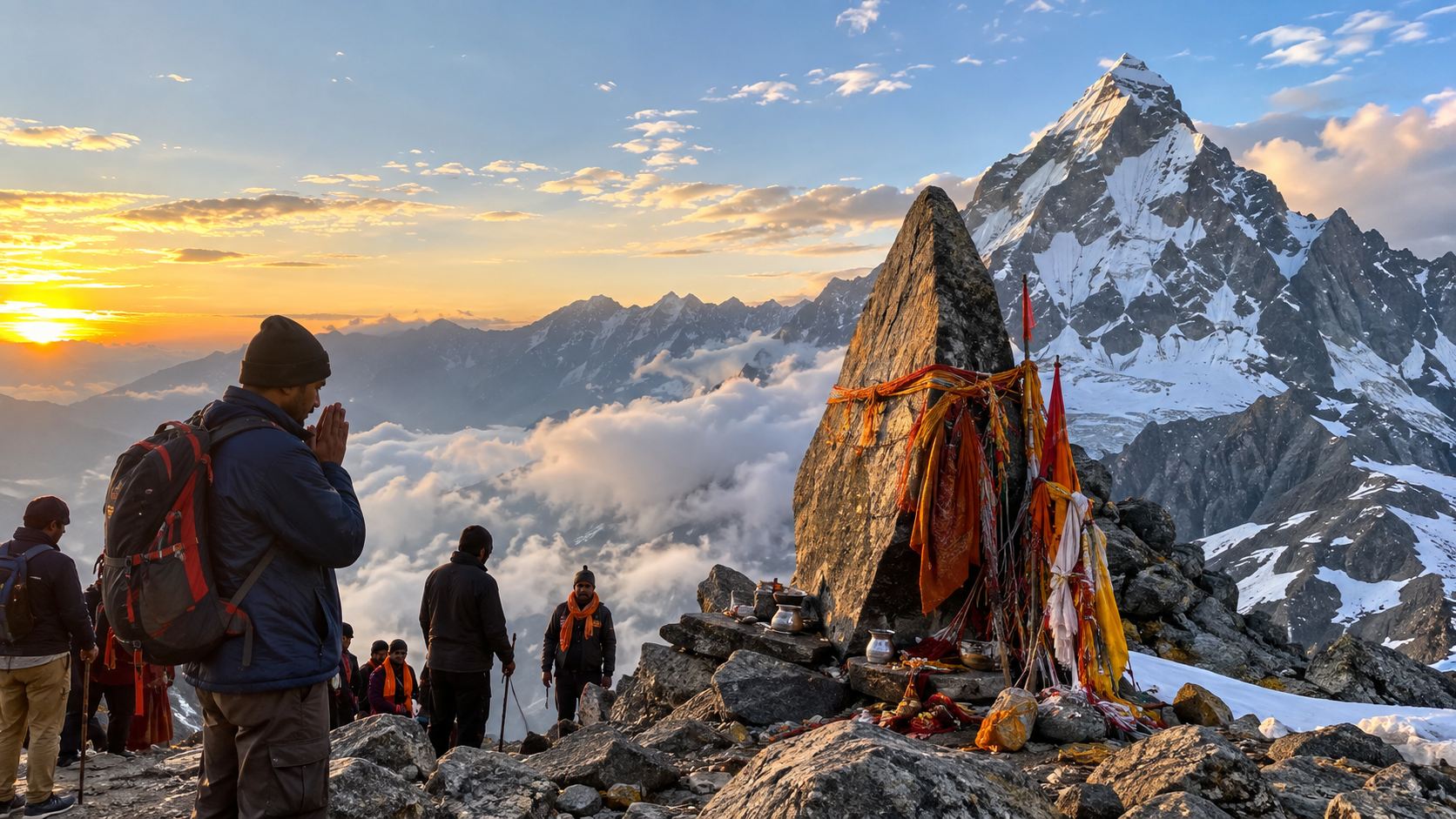
The religious importance of Amarnath centres on the ice Shivling inside the cave. Devotees undertake the Amarnath pilgrimage to offer prayers and seek darshan at the Holy Cave Shrine.
The Shrine Board describes the cave as the abode of Lord Shiva and identifies the naturally formed ice lingam as the central object of worship. The cave and its surrounding pilgrimage route have therefore become an important destination for Shiva devotees from across India.
The pilgrimage is also significant because the journey itself forms part of the religious experience. Traditional stopping points along the Pahalgam route include Chandanwari, Pissu Top, Sheshnag and Panchtarni. The Shrine Board's published route information lists the Pahalgam approach as Jammu–Pahalgam–Chandanwari–Pissu Top–Sheshnag–Panchtarni–Holy Cave, while the Baltal approach runs through Domail and Barari to the cave.
Amarnath Yatra History and Legend
Several traditional accounts are associated with the Amarnath Cave Shrine. These should be understood as religious folklore and tradition rather than independently verified historical events.
According to the account published by the Shrine Board, Lord Shiva chose a secluded cave to tell Parvati the Amar Katha, or story of immortality. The traditional story describes Shiva leaving behind various companions and elements at places along the route before entering the cave with Parvati. The same account connects the journey with places such as Pahalgam, Chandanwari, Sheshnag, Mahagunas and Panchtarni.
Another popular tradition concerns a shepherd named Buta Malik, who is said to have rediscovered the cave. The Shrine Board presents this as a popular story surrounding the rediscovery of the Holy Cave rather than as a modern historical record.
For visitors, these traditions help explain why locations along the pilgrimage route carry religious significance beyond their Himalayan scenery.
Amarnath Yatra Route: Baltal or Pahalgam?
The two established approaches offer different pilgrimage experiences.
Baltal Route
The Baltal route is the shorter of the two principal trekking approaches. The Shrine Board currently describes it as approximately 14 km from the Baltal base area to the Holy Cave. Baltal is near Sonamarg in Ganderbal district, and the route's access-control point is at Domail.
The shorter distance can make Baltal attractive to pilgrims who want a more compact trekking itinerary. However, a shorter route does not automatically mean an easy walk. It remains a steep, high-altitude mountain journey and should be approached with appropriate fitness, footwear and acclimatisation.
Pahalgam Route
The Pahalgam route is longer, with the Shrine Board giving an approximate distance of 32 km to the Holy Cave. The base camp is at Nunwan near Pahalgam, while the access-control gate is at Chandanwari.
This route passes through traditional pilgrimage points including Pissu Top, Sheshnag and Panchtarni. It is generally chosen by travellers who prefer a longer journey through the established pilgrimage landscape rather than simply taking the shortest approach.
| Route | Approximate route distance | Main access point | Character |
|---|---|---|---|
| Baltal | 14 km | Domail | Shorter, demanding mountain approach |
| Pahalgam | 32 km | Chandanwari | Longer traditional pilgrimage route |
Distances and route operations should be treated as approximate. Actual access, camping arrangements and movement restrictions depend on the conditions and official instructions for the particular Yatra season.
Amarnath Yatra Registration and Permit
Registration is an essential part of planning the pilgrimage. For the 2026 Yatra, the Shrine Board's advance-registration guidelines required pilgrims to register through designated channels, submit a valid Compulsory Health Certificate and obtain a Yatra permit. Registration was subject to route-wise and date-wise quotas.
For 2026, advance registration through designated bank branches began on 15 April. The published guidelines specified that the Compulsory Health Certificate had to be issued on or after 8 April 2026 by an authorised doctor or medical institution.
A registered pilgrim must also collect and carry the required RFID card before beginning the Yatra. The Shrine Board specifically states that the RFID card is mandatory and should be worn during the journey.
Because registration procedures, health requirements, dates and quotas are season-specific, travellers planning a future Amarnath Yatra should rely on the latest official Shrine Board notification rather than older guides.
Amarnath Darshan and Timings
Darshan at the Holy Cave takes place within the regulated Yatra system. Travellers should not assume that the cave operates like an ordinary temple with fixed public visiting hours throughout the year.
Access is controlled through designated gates and valid Yatra permits. For the 2026 system, the permit specified the route and the date on which the pilgrim could cross the relevant access-control gate at Domail or Chandanwari.
Daily movement can also be affected by weather, security arrangements, crowd management and route conditions. For this reason, exact Amarnath Yatra timings should be checked from the Shrine Board close to the travel date.
At the shrine, pilgrims should:
- Follow the instructions of Shrine Board staff and security personnel.
- Keep the RFID card and required identification with them.
- Avoid pushing, rushing or stopping unnecessarily in regulated areas.
- Dress modestly and maintain the sanctity of the place of worship.
- Do not photograph or record where photography is restricted.
- Keep the route and cave area clean.
- Follow any temporary instructions regarding darshan, queues or access.
Best Time for Amarnath Yatra
The Amarnath pilgrimage is seasonal because the Holy Cave is located at high altitude and the approach routes are affected by Himalayan weather.
The Shrine Board describes the annual pilgrimage as taking place during the summer pilgrimage period, traditionally in the June–August window, although the exact Yatra dates vary each year.
For practical planning, the best time is not simply the warmest period. Pilgrims should select an officially announced Yatra date and then check the latest weather, route and access advisories.
Weather can change quickly at high altitude. The Shrine Board advises pilgrims to carry sufficient woollen clothing, rain protection and waterproof footwear, noting that temperatures can fall sharply and that weather in the Yatra area is unpredictable.
How to Reach Amarnath Cave
The first stage of the journey is reaching the appropriate base area in Kashmir.
Srinagar is the main practical gateway for many travellers. The Shrine Board states that Jammu and Srinagar have year-round road, rail and air connectivity. From Srinagar, pilgrims travel by road towards either Baltal or the Pahalgam/Nunwan side depending on their registered route.
For the Baltal Route
Travel by road from Srinagar towards Sonamarg and Baltal. Baltal serves as the base area, with the access-control point at Domail. From there, the pilgrimage continues towards the Holy Cave.
For the Pahalgam Route
Travel from Srinagar towards Pahalgam and the Nunwan base camp. The regulated approach begins towards Chandanwari, which serves as the access-control point for the Pahalgam axis.
Road travel times can vary substantially with traffic, weather, security checks and seasonal restrictions, so it is better to keep a buffer rather than build a tightly timed itinerary.
Local Transport and Services
Transport arrangements around the Amarnath Yatra are seasonal and regulated. At the pilgrimage camps, the Shrine Board lists ponies, pithus and palkis as services that pilgrims can hire on a rental basis through designated arrangements.
For 2026, the Shrine Board also published government-notified rates for pony rides, porters, palkis and accommodation. Travellers should check the current season's notified rates and use authorised counters or arrangements rather than relying on informal quotations.
An important 2026-specific point was the suspension of helicopter access in the Yatra area following the declaration of the Pahalgam and Baltal axes as no-flying zones from 1 July 2026 until completion of the Yatra. Pilgrims were advised to reach the Holy Cave on foot or use ponies and palkis.
This illustrates why older Amarnath travel articles should not be used as the sole source for current transport planning.
Stay and Accommodation During the Yatra
Accommodation is available in and around the pilgrimage base camps and along the Yatra route during the operating season. The Shrine Board lists tented accommodation at locations including Nunwan, Baltal, Sheshnag and Panchtarni.
Facilities are functional rather than comparable with conventional city hotels. Travellers should plan for basic high-altitude conditions and confirm availability before travelling.
For a more comfortable itinerary, many visitors prefer to arrange their principal hotel stay in Srinagar, Pahalgam or the Sonamarg area and use the designated Yatra accommodation only where the pilgrimage itinerary requires it.
During the Yatra season, langars provide food, drinking water and refreshments at various points along both routes. Medical facilities, emergency aid centres and other support services are also established at locations along the pilgrimage route.
Accessibility and Physical Preparation
Amarnath is a high-altitude pilgrimage and should not be treated as a conventional temple visit. The terrain, elevation, weather and length of the route can make the journey physically demanding.
Before travelling:
- Read the current health and registration requirements carefully.
- Obtain the required Compulsory Health Certificate from an authorised source.
- Build some walking and endurance training into your preparation.
- Carry layered clothing, rain protection and suitable trekking footwear.
- Keep essential medicines and personal documents accessible.
- Avoid carrying an unnecessarily heavy backpack.
- Allow time for rest and acclimatisation.
- Follow official advice if weather or route conditions change.
The Shrine Board provides medical facilities along the Yatra route, but these should be regarded as support infrastructure rather than a substitute for sensible preparation.
Nearby Places to Visit
The Amarnath journey can be combined with other destinations in Kashmir, subject to the timing of the Yatra and local travel conditions.
Pahalgam
Pahalgam is an important gateway for the longer pilgrimage route and is also a major Kashmir tourism destination. It provides a useful place to stay before or after the Yatra for travellers using the Pahalgam axis.
Chandanwari
Chandanwari is the access point for the Pahalgam pilgrimage route and an important location in the traditional Yatra journey. It is also known for its mountain scenery and is a natural stop when exploring the Pahalgam side.
Sonamarg
Sonamarg is close to the Baltal side of the pilgrimage and can be incorporated into an itinerary using the Baltal route. Its alpine landscape makes it a popular addition to a Kashmir trip.
Sheshnag and Panchtarni
These are primarily pilgrimage-route locations rather than conventional sightseeing attractions. They are associated with the Pahalgam approach and form part of the traditional journey towards the Holy Cave.
Practical Tips for Visiting Amarnath Cave Shrine
A little preparation makes the pilgrimage considerably easier.
- Confirm the official Yatra dates before booking transport.
- Complete registration and health-document requirements well in advance.
- Check the latest route-specific instructions.
- Carry the required RFID card and identification.
- Keep your Yatra permit readily accessible.
- Pack warm layers even if Kashmir is warm at your starting point.
- Carry a waterproof bag for clothing, documents and electronics.
- Use sturdy, well-broken-in footwear.
- Carry rain protection because mountain weather can change quickly.
- Keep some cash available for authorised local services where required.
- Use designated service counters for ponies, palkis and other paid facilities.
- Do not depend on mobile connectivity throughout the mountain route.
- Keep emergency contact details separately from your phone.
- Follow instructions from the Shrine Board, security personnel and local administration.
The Shrine Board also advises pilgrims to keep an emergency contact note with them and specifically recommends adequate warm clothing, rain protection and waterproof shoes.
Plan Your Amarnath Pilgrimage
A visit to the Amarnath Cave Shrine requires more planning than a typical sightseeing excursion. The right route, registration documents, health certificate, suitable clothing and realistic travel schedule all matter.
For the latest pilgrimage season, always verify dates, registration rules, route access, darshan arrangements, transport options and government-notified service rates with the Shri Amarnathji Shrine Board before departure. Official information is particularly important because arrangements can change in response to weather, security, administration and route conditions.
If you are planning an Amarnath pilgrimage and would like help arranging the wider Kashmir journey, route selection, accommodation and practical travel logistics, Trip to Yatra can help you plan the trip around your preferred dates and travel style. For a smoother visit to the Amarnath Cave Shrine, share your tentative travel dates and group details with Trip to Yatra for suitable planning assistance.